Key points
A number pattern is a series of numbers that follow a specific rule. Examples include: odd numbers, even numbers, square numbers and multiples.
A good knowledge of arithmetic and geometric sequences is essential to understanding other types of A sequence is a set of numbers that follow a certain rule. For example, 3, 5, 7, 9… is a sequence starting with 3 and increasing by 2 each time..
- Each number in a sequence is called a term.
- A sequence which increases or decreases by the same amount each time is called a A set of numbers (terms) in which the next term is found by adding or subtracting the same number each time..
- The A term-to-term rule is a rule that allows you to find the next number in a maths sequence, if you know the previous numbers (or terms). of a sequence describes how to get from one term to the next.
- There are other types of sequence that follow a rule, but increase or decrease by a different amount each time.
Finding missing terms in a non-linear sequence
Linear sequences increase or decrease by the same amount each time.
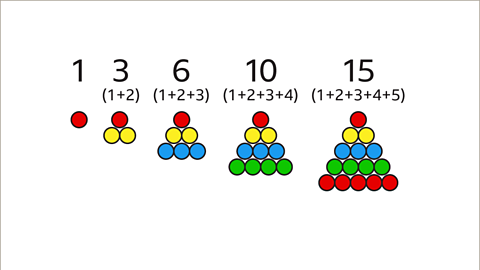
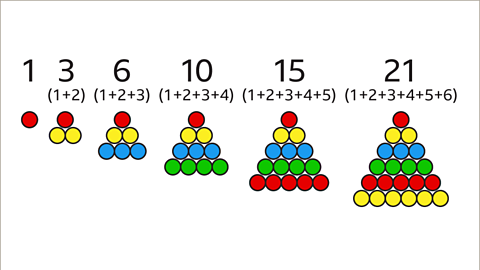
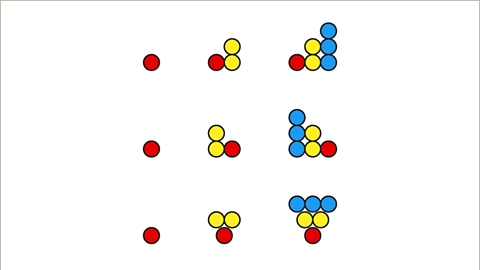
Not all sequences are linear. The term-to-term differences may not be the same and the next term is not always obvious.
There is often a pattern between the differences, rather than the terms, which helps to predict the next number in the sequence.
Example
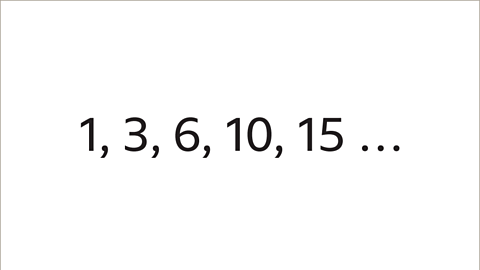
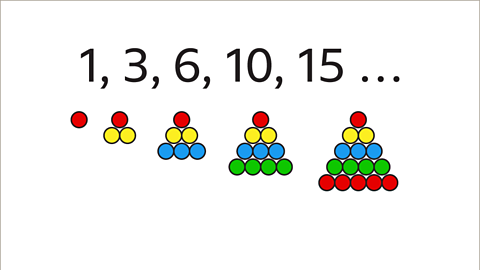
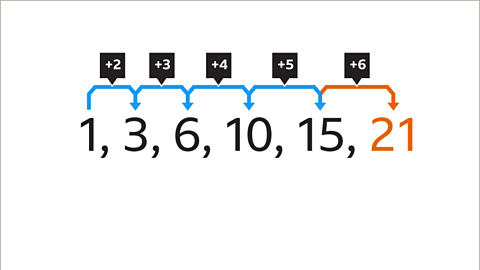
Image caption, What is the next term in the sequence?
1 of 8
Question
What is the next term in this sequence?
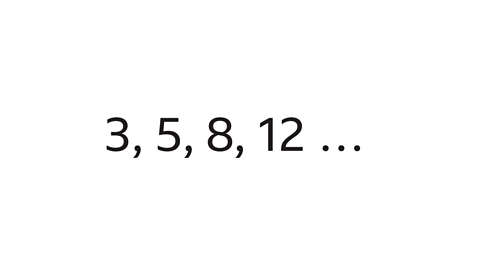
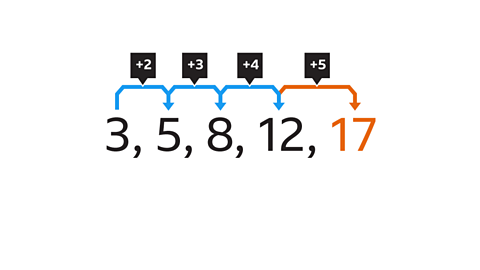
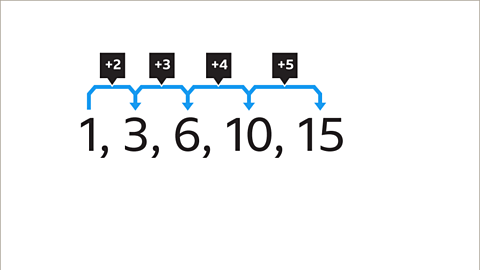
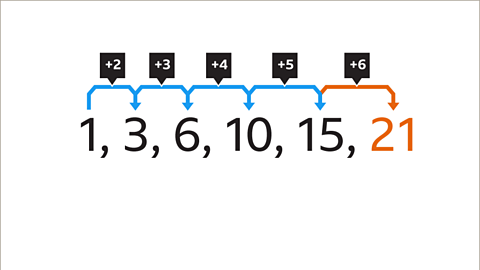
The difference between each term in the sequence increases by 1 each time.
5 – 3 = 2
8 – 5 = 3
12 – 8 = 4
The difference between the next 2 terms will be 5
12 + 5 = 17
The next term in the sequence is 17
Finding the next term in a quadratic sequence
A quadratic sequence is a list of numbers with a definite pattern. They can be identified by the fact that the differences between the terms are not equal, but the second differences between terms are equal. involve A number that can be written as the product of two equal numbers. Eg, 100 is a square number as it is the result of 10 × 10.
They can be identified by the fact that the differences between the terms are not equal.
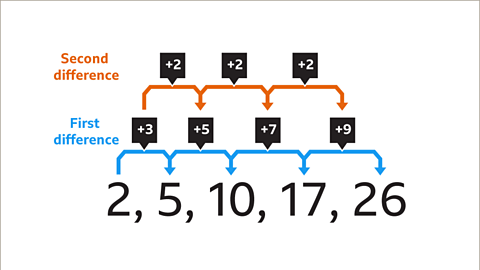
However, the difference between the differences (known as the second difference) is equal.
The term-to-term rule and the second difference can be used to find the next number in a quadratic sequence.
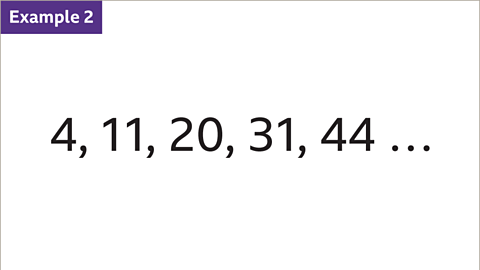
Examples
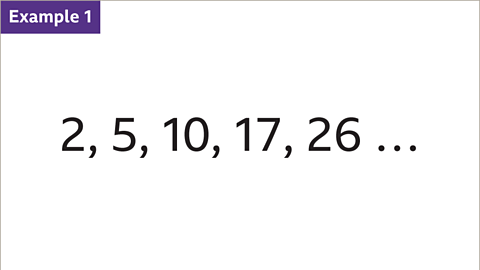
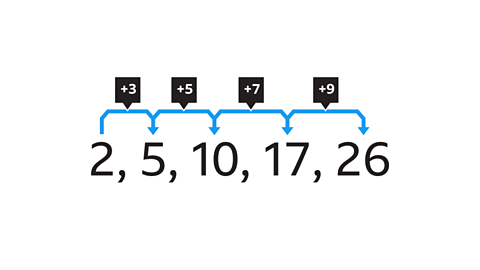
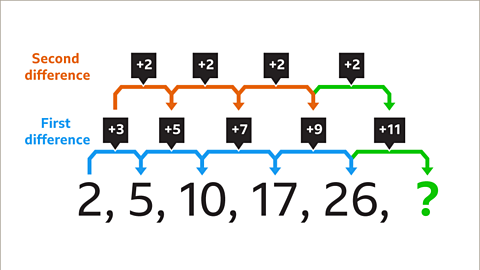
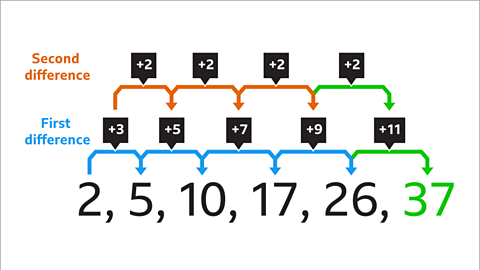
Image caption, What is the next term in this sequence?
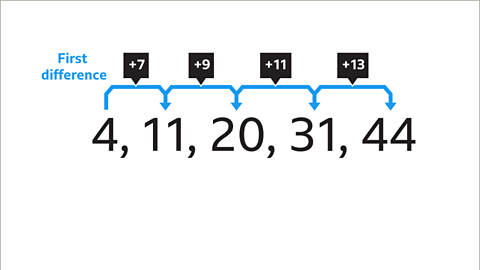
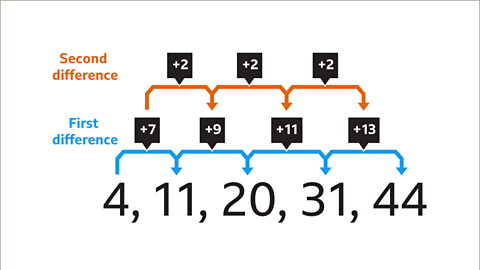
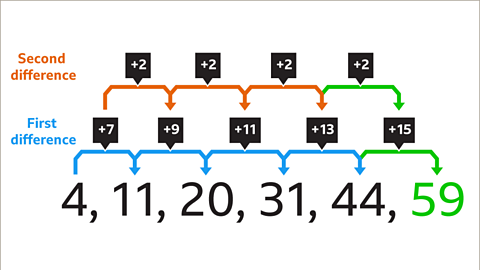
1 of 9
Question
What is the next term in this sequence?
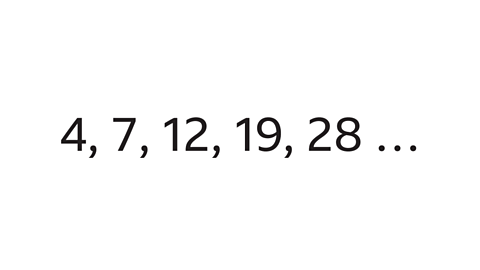
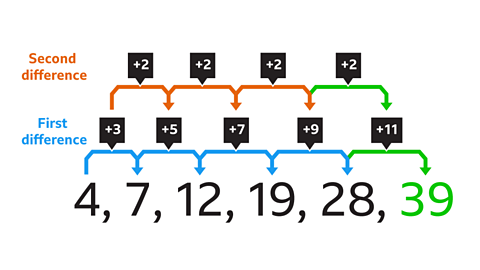
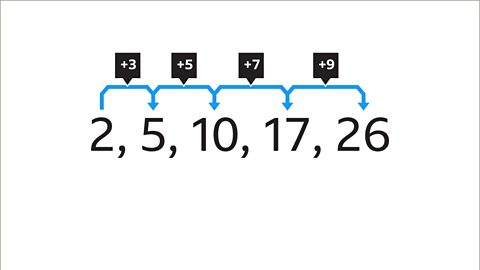
The first difference between each pair of terms changes each time.
The differences are +3, +5, +7, +9
The second difference is +2
The difference between the fifth and sixth term will be 9 + 2 = 11
The next number will be 28 + 11 = 39
Practise other sequences
Quiz
Practise recognising and finding terms in other sequences with this quiz. You may need a pen and paper to help you with your answers.
Real-life maths
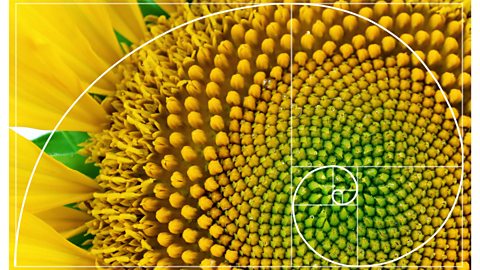
Non-linear sequences can be seen in nature.
The number of petals on many flowers and the branches of trees grow in a ‘Fibonacci sequence’.
This is a naturally occurring pattern where the previous two numbers are added together to create the next number in the sequence (0, 1, 1, 2, 3, 5, 8, 13, 21, 34…).
Some flowers have 3 petals, others have 5 petals, others 8 petals, and so on.
Fibonacci numbers can be pictured as a spiral, which can also be seen in hurricanes, seashells and the pattern of sunflower seeds.
Play Sudoku with BBC Bitesize!
Every weekday we release brand new easy, medium and hard Sudoku puzzles. Perfect for testing your skill with numbers and logic.

More on Patterns and sequences
Find out more by working through a topic
- count3 of 4