What are oceans?
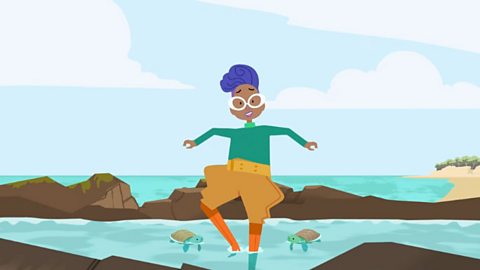
Oceans are large bodies of salt water. They are home to a wide variety of amazing marine animals and plants and provide us with food, and water. With long sandy beaches, they're also fun places to play, paddle and swim.
There are more oceans than there is land as two thirds of the world is covered by oceans. There are five oceans in the world. All five oceans are connected with each other, and water flows between them.
Geography
The world's oceans
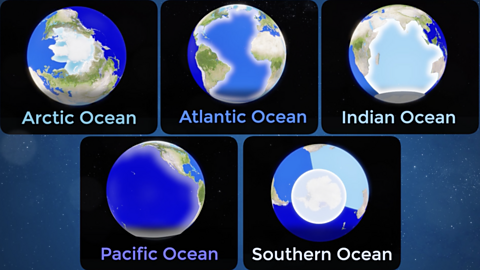
- The oceans are the Pacific Ocean, the Atlantic Ocean, the Indian Ocean, the Southern Ocean and the Arctic Ocean.
- The Pacific Ocean is the world’s largest ocean.
- The deepest known area of the ocean is the Mariana Trench in the Pacific Ocean. It is nearly 11,000 metres deep.
- The Arctic Ocean is the world’s smallest and shallowest ocean.
- The United Kingdom is in the Atlantic Ocean.
What is the water cycle?
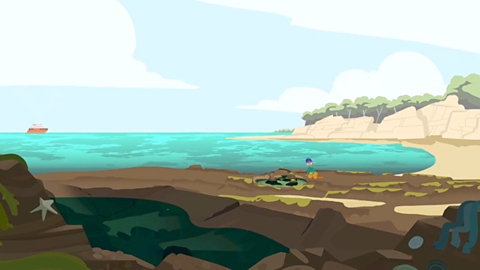
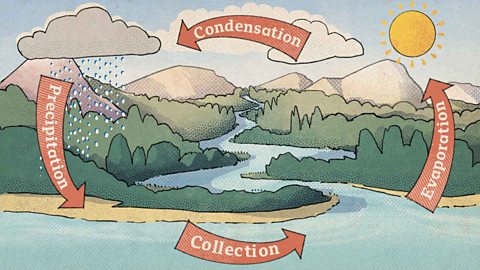
Even if you're a long way from the beach, the ocean is always with you. The water you drink and the air you breathe come to you from the sea. The water on Earth is constantly moving and being recycled in a process called the water cycle.
What happens in the water cycle?
1. Water evaporates into the air.
The Sun heats up water on land, in rivers, lakes, seas and oceans and turns it into water vapour. The water vapour rises into the air.
2. Water vapour condenses into clouds.
Water vapour in the air cools down and changes back into tiny drops of liquid water, forming clouds.
3. Water falls as precipitation.
The clouds get heavy and water falls back to the ground in the form of rain or snow.
4. Water returns to the sea.
Rain water runs over the land and collects in lakes or rivers, which take it back to the sea where the cycle starts all over again.
Discover more about the oceans and the water cycle with these Bitesize guides.
Five oceans of the world
Bitesize: KS2 Geography
Why are our oceans important?
Bitesize: The Regenerators
The water cycle
Bitesize: KS2 Geography
Science
Oceans at work
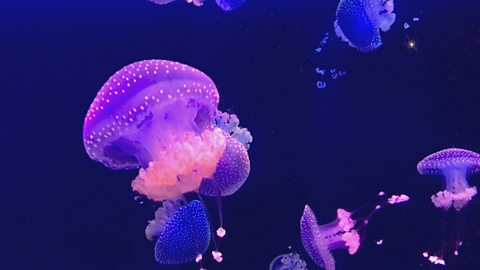
Oceans provide the perfect habitat for thousands of different species of marine plants and animals.
They are home to hardworking plankton and seagrass which play a role in the health of the oceans. They work hard to keep carbon, oxygen and other gases in the air balanced. This is really important to create an environment that humans and other animals and plants can survive in.
There are two types of plankton - zooplankton and phytoplankton.
Find out more about zooplankton and phytoplankton.
Zooplankton is made up of tiny creatures and phytoplanktons are plants.
Like plants on land, phytoplankton take in carbon dioxide and produce oxygen. This is very important for humans as we need oxygen to survive.
Seagrass beds provide the perfect habitat, or home, for thousands of different species of animals. Scientists have also discovered that seagrass has a vital role to play in the battle to reverse climate change.
Find out more about seagrass.
Seagrass can take carbon out of the atmosphere around 35 times faster than tropical rainforests.
Seagrass also produces oxygen which again is vital for humans as we need oxygen to breathe.
To find out more about the work of the ocean and its role in reversing climate change, take a look at these guides.
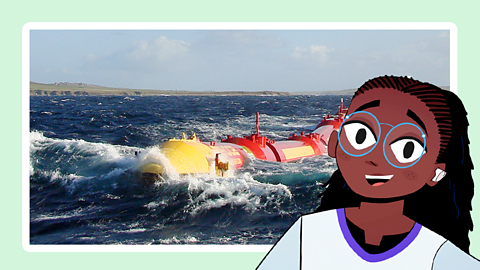
How can we generate electricity from the sea?
Bitesize: The Regenerators
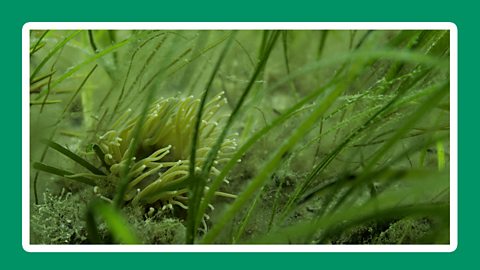
How can seagrass help slow down climate change?
Bitesize: The Regenerators
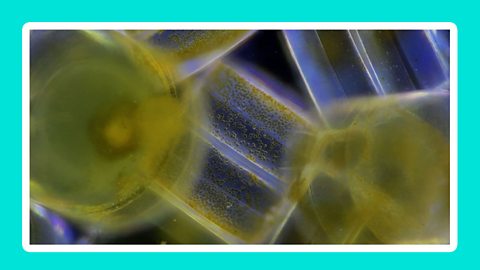
The importance of plankton
Bitesize: The Regenerators
Ocean wildlife
What is the most intelligent animal in the ocean and what is the largest mammal?
Find out more about some of the animals that inhabit the oceans and discover what some ocean animals do to protect themselves from predators.
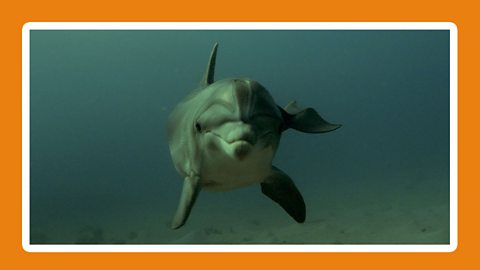
What is the most intelligent animal in our oceans?
Bitesize: The Regenerators
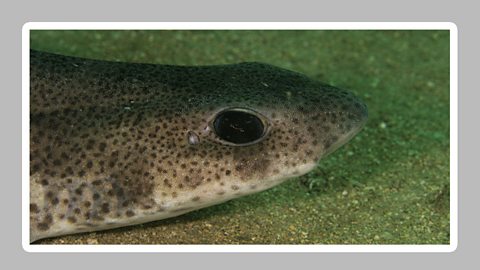
How can some ocean animals avoid predators?
Bitesize: The Regenerators
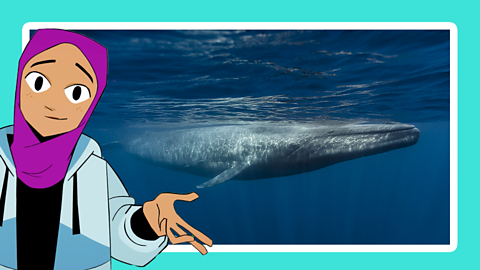
What is the largest mammal that comes to our shores?
Bitesize: The Regenerators
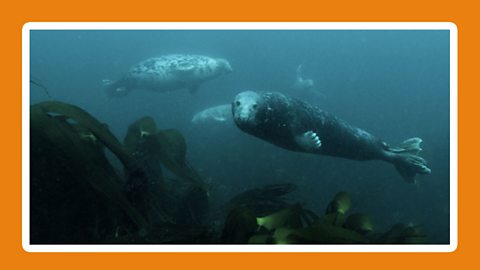
Activity: Ocean quiz
Test yourself to see how much you know about the world's oceans.
Citizenship
Protecting our oceans
What problems do our oceans face from the use of plastics and what can we do to protect them?
Find out more in these guides from BBC Bitesize for Teachers and Bitesize Regenerators.
World Ocean Day
BBC Teach
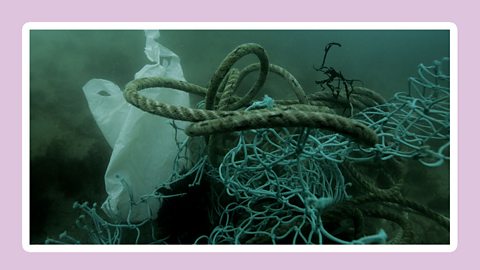
What happens when plastics get into the ocean?
Bitesize: The Regenerators
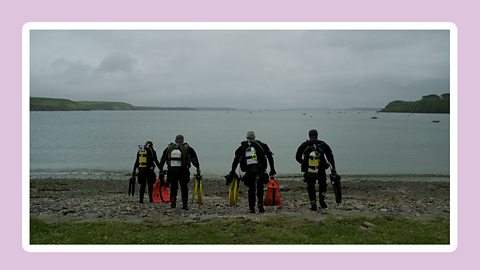
How can we clean up ocean plastics?
Bitesize: The Regenerators
Where next?
World Ocean Day Assembly
BBC Teach
What are rivers?
Bitesize: KS2 Geography
What is trade?
Bitesize: KS2 Geography
Play Bitesize Primary games. game
Fun and educational primary games in science, maths, English, history, geography, art and design, computing and modern languages.