Key points
Water is a compound of two A pure substance which is made from only one type of atom. Elements are listed on the periodic table.: hydrogen and oxygen.
Water has many special A quality, or characteristic of something. Physical properties of matter are measurable, for example melting point or boiling point..
Water is vital to all plant and animal life on Earth.
What is water?
Water is so important because it's one of the building blocks of life. About 60% of your body is made up of water.
My name is Rebecca, and I work in research and development in the water industry which is finding more innovative ways of treating water and wastewater.
In the water industry, we have two very separate streams of work. The first is taking waste away from your home and treating it and releasing it back into the environment. And then the reverse process, where we take the water from the environment, treat it so it can then be drunk in your house.
Every day we process about 352 megalitres of water which is the equivalent of 141 Olympic-size swimming pools. It's a lot of water, isn't it?
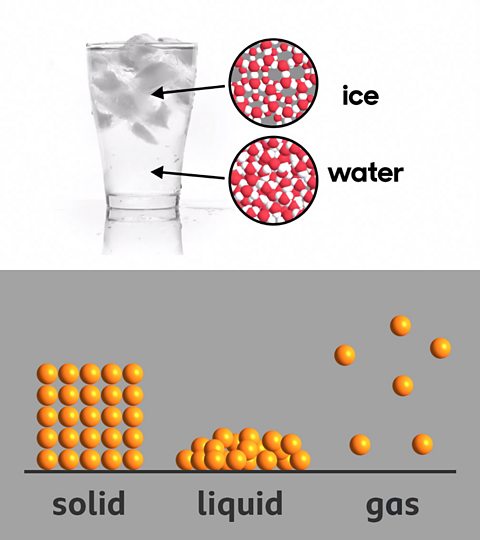
Water is made of one part oxygen and two hydrogen atoms, that's the chemical symbol, H₂O. An interesting fact about water is its solid form is less dense than its liquid form, which is why ice cubes float in the water.
Wastewater is everything that comes out of your house, including your toilet and your showers. It will travel along pipes until it gets to our treatment works.
We first filter off any big particles - nappy wipes, cotton buds - and then we take off smaller particles like the organic matter in your poo. We then treat the water with the same kind of bacteria that is in your gut, but at the same time we add oxygen to it, which makes the chemical process move a lot faster.
And from there, we then take it out into the environment. In my job, I use the science that I learned in school to be able to know which technologies are gonna be best to apply to wastewater treatment or water treatment.
The best thing about working in the water industry is that every day is different and I know that I am helping to keep water safe for people to drink.

Inside a water molecule
Water exists as Two or more atoms which are strongly bonded together. The smallest particle of a substance that has all of the physical and chemical properties of that substance.. Each molecule is made up of two hydrogen (H) The smallest particle of an element. We often think of atoms as tiny spheres, but in fact they are made from smaller particles called protons, neutrons and electrons. joined to one oxygen (O) atom.
This means that the chemical formula of water is H₂O.
Why is water special?
Water covers more than 70% of the Earth’s surface. The most common locations are in oceans, rivers, lakes and glaciers.
It has special properties:
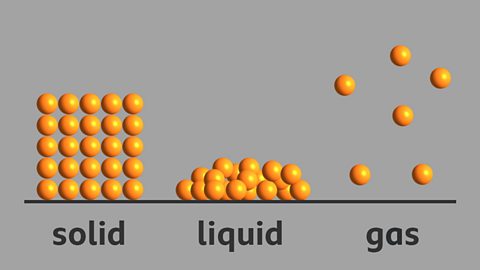
it exists in the One of the three states of matter. Solids, like ice or concrete, have a fixed shape and cannot be compressed easily., One of the three states of matter. Liquids, like water or oil, do not have a fixed shape and can flow. and One of the three states of matter. Gases, like oxygen or helium, do not have a fixed shape and can expand to fill their container. states at normal temperatures on Earth
at 4°C water is at its most A measure of how heavy something is compared to its size. Measured in units of mass per unit of volume (e.g. g/cm3).. Below this temperature, ice is able to float on liquid water
water The process when a solute is mixed with a solvent and the solute breaks into much smaller particles and spreads out. many substances, including salts in the sea and proteins in living things
water has a highThe attraction force in liquids that pulls the surface molecules in towards the rest of the liquid, minimising the surface area and making the surface act like an elastic membrane. Surface tension allows small things to float on liquid surfaces., allowing some small insects to walk on its surface
Why is water important?
Water is essential to all animal and plant life on Earth. Plants, for example, use water in A chemical process used by plants to make glucose and oxygen from carbon dioxide and water, using light energy. Oxygen is produced as a by-product of photosynthesis. Algae subsumed within plants and some bacteria are also photosynthetic. to make their food.
Roughly 60% of the adult human body is water and it performs many functions, including:
- dissolving vital nutrients in the bloodstream and delivering them to cells
- regulating our body temperature
- dissolving waste substances and carrying them out of the body in urine, faeces and sweat
- protecting tissues, joints and the spinal cord
Humans need to drink plenty of water to replenish what we lose though sweat, urine, and faeces.
Test your knowledge
Play the Atomic Labs game! game
Try out practical experiments in this KS3 science game.

More on The particle model of matter
Find out more by working through a topic
- count1 of 4
- count2 of 4
- count3 of 4

