|
 |
 | | | | | | |||||||||||||||||||||||||||||||||||||||||||||||||||||||||||||||||||||||||||||||||||||||
| | | You are in: UK: Scotland | |||||||||||||||||||||||||||||||||||||||||||||||||||||||||||||||||||||||||||||||||||||||||
|
| | Thursday, 1 August, 2002, 13:07 GMT 14:07 UK New rules on crash inquiries 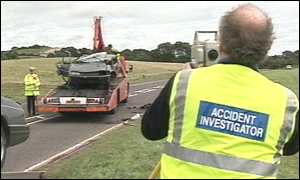 Fiscals will decide whether or not to visit accident scenes Closer liaison between the procurator fiscal service and the families of people killed in road accidents is planned under new guidelines. The measures could also lead to prosecutors making more frequent visits to accident scenes. The steps are among the guidelines produced after a top-level review by the Crown Office. The study, prompted by public concern over the way officers deal with traffic accidents, found no fundamental flaws in the existing system.
The measures are aimed at creating one set of rules which brings together the best practice from police forces across Scotland. The Lord Advocate, Colin Boyd QC, said this would create a closer working relationship between police and the fiscal service. "These guidelines are intended to ensure that the highest possible standards are maintained in the investigation of these complex cases," he said. "This more formalised procedure means that the public can be confident of the quality and consistency of such investigations." Initial briefing Under the guidelines, fiscals will be required to keep in close touch with victims' families about prosecutions - an area where the service has been criticised in the past. Police officers are advised to report fatal road accidents "as soon as possible" and told not to charge anyone until instructed to do so by the procurator fiscal. After the initial briefing is received, the fiscal will decide whether or not to attend the scene of the crash. Investigating officers are told they should attend meetings held by the procurator fiscal with a victim's family.
Police officers are also urged to do all they can to be sensitive to the needs of family members from an ethnic minority. "In cases where it appears that the deceased's family may have specific cultural or religious needs the death report and associated criminal report should clearly specify both their ethnic and religious background to ensure that liaison can take place in a manner which is sensitive to their cultural and religious needs," the guidelines state. Police have welcomed the new measures, which they believe will lead to a more efficient and humane way of dealing with the incidents. Willie Bald of the Association of Chief Police Officers in Scotland (Acpos) said: "The formal recognition of the work done with the families of victims and its importance is also a very positive aspect. "The guidelines will also complement our own work in developing an investigation guidance manual for enquiry officers." | | See also:  13 Jun 02 | Scotland 10 Apr 02 | Scotland 04 Mar 02 | Scotland 20 Feb 02 | Scotland Internet links: The BBC is not responsible for the content of external internet sites Top Scotland stories now: Links to more Scotland stories are at the foot of the page. | |||||||||||||||||||||||||||||||||||||||||||||||||||||||||||||||||||||||||||||||||||||||
| |
|  E-mail this story to a friend E-mail this story to a friend |
| |
| Links to more Scotland stories |
| | | ||
 | ||||
 | | Back to top
| ||
| ---------------------------------------------------------------------------------- To BBC Sport>> | To BBC Weather>> | To BBC World Service>> ---------------------------------------------------------------------------------- © MMIII | News Sources | Privacy |