|
 |
 | | | | | | |||||||||||||||||||||||||||||||||||||||||||||||||||||||||||||||||||||||||||||||||||||||||||||||||||||||||||||
| | | You are in: UK: Politics | |||||||||||||||||||||||||||||||||||||||||||||||||||||||||||||||||||||||||||||||||||||||||||||||||||||||||||||||
|
| | Tuesday, 15 October, 2002, 16:44 GMT 17:44 UK Iraq doubters hold their fire 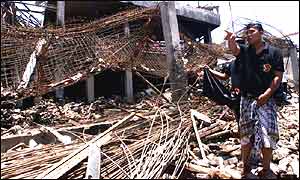 Bali may have changed the threatened action on Iraq
Members on all sides are united in their horror at the attack and their utter condemnation of those responsible. And few doubt that this was the long-expected follow up to 11 September and has thrown the war against international terrorism into sharper focus.
But for many on the Labour benches it has only served to underline their deep concerns about the prime minister's plans. Off the ball Mr Blair was challenged on a number of occasions over his determination to target Saddam Hussein and the potential dangers of escalating the war. One fear is that, having switched attention away from Afghanistan and Al-Qaeda in favour of preparing for action against Iraq, Britain and America have taken their eye off the ball. At the same time, those already opposed to war with Iraq stepped up their demands that no action should be taken without full UN support. No one spelt it out, but there are many on the Labour backbenches who believe the Bali attack was a direct retaliation for the US-led war against terrorism. They believe it graphically illustrates their fears of what may well happen if the UK and US go to war against Saddam - with or without UN backing. Unilateral action Veteran backbencher Alice Mahon summed up many of the concerns, declaring that all energies should be directed at fighting terrorism: "not starting another war in the Middle East which would fan the flames of fundamentalism."
Backbencher Bob Warding went so far as to claim any action against Iraq without the backing of an international coalition would only serve as a "a recruiting squad for the international terrorists we must defeat." But the prime minister remains unbending. Time and again he has insisted it is quite possible to deal with Iraq and international terrorism at the same time - it is not a case of one or the other. And he suggested the Bali atrocity was further proof, if any was needed, of the dangers posed to the world by terrorism and fundamentalism. At the moment, there is no sign that the events in Indonesia have changed the prime minister's thinking. But this debate is far from over. | |
See also:  15 Oct 02 | Asia-Pacific 15 Oct 02 | UK 15 Oct 02 | Asia-Pacific Internet links: The BBC is not responsible for the content of external internet sites | |||||||||||||||||||||||||||||||||||||||||||||||||||||||||||||||||||||||||||||||||||||||||||||||||||||||||||||
| |
|  E-mail this story to a friend E-mail this story to a friend |
| |
|
| | | ||
 | ||||
 | | Back to top
| ||
| ---------------------------------------------------------------------------------- To BBC Sport>> | To BBC Weather>> | To BBC World Service>> ---------------------------------------------------------------------------------- © MMIII | News Sources | Privacy |