|
 |
 | | | | | | ||||||||||||||||||||||||||||||||||||||||||||||||||||||||||||||||||||||||||||||||||||||||||||||||||||||||||||||||
| | | You are in: UK: Politics | ||||||||||||||||||||||||||||||||||||||||||||||||||||||||||||||||||||||||||||||||||||||||||||||||||||||||||||||||||
|
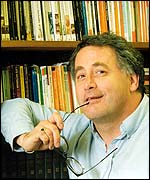
| | Friday, 11 October, 2002, 11:55 GMT 12:55 UK Tory chief 'can do better' 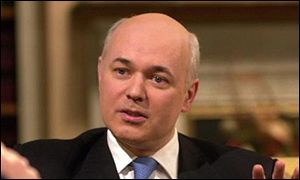 'Weakest link' of the speeches given by party leaders? Iain Duncan Smith showed his "lack of confidence" as a leader during his speech to the party faithful at Bournemouth, according to an English language expert. Nervous hand gestures, a lack of eye contact with his audience and only one smile did little to grab the attention of Conservatives listening to his conference address, Professor John McRae said.
But the lecturer in English language at the University of Nottingham claimed Mr Duncan Smith's single sentence, sound-bite kind of delivery, had improved from the days when it seemed as though his speeches were written by "an old lady in a cardigan". Prof McRae gave his critical assessment after studying the Tory leader's near-hour long speech, in which he called for the party not to "underestimate the determination of a quiet man". 'Nervous gestures' "All three leaders have very similar concerns, themes and messages - they are all talking about health, pensions, education and Iraq," he said. "But Iain Duncan Smith was having to address the party conference in order to try to get the Conservatives back on track - as he says at the end of his speech, 'the Conservatives are back'. "There was only one smile. His hand gestures were awful, very nervous, very uncertain - waving the hands about.
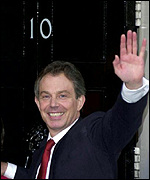
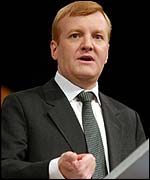
Prof McRae contrasted Mr Duncan Smith's claim that "the Conservatives are back", with Liberal Democrat leader Charles Kennedy's assertion that his party was the "effective opposition". Tricks of the trade "It would be better for British politics if that was what Iain Duncan Smith demonstrated today. "It demonstrated that the Conservatives are on the way back, but not that they are capable of using the language that people understand. "Duncan Smith has learnt from Blair and Kennedy in the use of single sentence sound bites - he has picked up a lot of the tricks of the trade in the past couple of months."
"If Duncan Smith had used something a bit more memorable he could have confined those people to the dustbin and history. He didn't. "He almost deliberately avoided anything musical, rhythmic." Waving his hands Prof McRae said Mr Duncan Smith's attempts to deepen his voice, in the same way that Margaret Thatcher had tried to gentle her tone, "sounded false". "It sounded as though he was struggling to get gravitas. It struck me that he was trying to give a more sonorous, serious tone to his voice.
It appeared that the Tory leader was reading from notes rather than a prompter, said Prof McRae. "He didn't make much eye contact with the audience which weakened the strength of what he was saying." Superiority complex? Prof McRae warned the party to stop referring to helping "the vulnerable". "By taking an adjective like 'poor' and 'vulnerable' and putting 'the' in front, you are creating a category, you are putting yourself in a superior position. "A lot of this speech was the Conservatives being patronising about the disadvantaged and that is something very un-people friendly.
Prof McRae said Mr Duncan Smith failed with his criticism of Labour's record on crime with the assertion "these are the victims that Labour has left behind". 'Humourless delivery' "If he had delivered that one better, that could have become quite a memorable sound bite from this speech, a slogan with public appeal. "But he always delivers it on a down note and I think it got lost. "He is clearly not experienced at giving big speeches. He has had a year to get his act together on that and as an act, as a performance, it didn't work." But while Prof McRae claimed the speech "lacked humour", he praised Mr Duncan Smith for not resorting to side swipes at his rivals. "He wants to be the honest broker, using words like honesty and decency." But Prof McRae stressed: "Unfortunately, people will stop listening five minutes in to the speech - it's so boring." 'Uphill struggle' On the repeated use of the word "trust", Prof McRae said: "It sounded like a desperate appeal to the party not an appeal to the people." When Mr Duncan Smith told the conference to "tell them this from me", Prof McRae said: "That doesn't sound convincing." On the Tories' "slow, hard road back to power", Prof McRae said: "It even sounded like an uphill struggle". It was "patronising" to describe people working in the public sector as "neglected heroes of British life". On Mr Duncan Smith's empathy with the person who had lost his job, Prof McRae said: "It was like saying, 'I can get on with working people and dustmen as well as the Duke of Edinburgh'." | |
See also:  01 Oct 02 | Politics 26 Sep 02 | Politics 19 Aug 02 | Politics 05 Aug 02 | Archive 18 Jul 02 | Politics Internet links: The BBC is not responsible for the content of external internet sites | ||||||||||||||||||||||||||||||||||||||||||||||||||||||||||||||||||||||||||||||||||||||||||||||||||||||||||||||||
| |
|  E-mail this story to a friend E-mail this story to a friend |
| |
|
| | | ||
 | ||||
 | | Back to top
| ||
| ---------------------------------------------------------------------------------- To BBC Sport>> | To BBC Weather>> | To BBC World Service>> ---------------------------------------------------------------------------------- © MMIII | News Sources | Privacy |