|
 |
 | | | | | | |||||||||||||||||||||||||||||||||||||||||||||||||||||||||||||||||||||||||||||||||||||||||||||||||||||||||||||||||||||||||||||||||||||||||||||
| | | You are in: UK: Education | |||||||||||||||||||||||||||||||||||||||||||||||||||||||||||||||||||||||||||||||||||||||||||||||||||||||||||||||||||||||||||||||||||||||||||||||
|
| | Monday, 7 October, 2002, 15:17 GMT 16:17 UK Tories back parent power in education 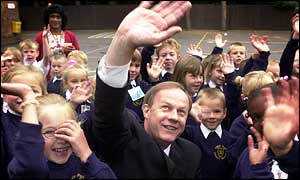 Damian Green visiting a school on Monday The Conservatives plan to let parents who are not happy with their local schools set up new ones with state funding.
The schools would be funded by the state to the same level as state schools - currently an average of about �4,900 per pupil a year. Addressing the party conference on Monday, the Conservative education spokesman, Damian Green, said the idea was commonplace elsewhere. Some 70% of schools in the Netherlands were run on a similar basis, he said. They agree that the government's duty is to pay for children's education. But they know that government does not have a monopoly of wisdom about how to run a school," he said.
"That simple fact is recognised not just in Holland, but in Sweden, Denmark, many other European countries and the United States. Why should services funded by the state be run by the state?" So he would introduce State Scholarships, starting in the most deprived areas, which would allow parents and other groups to set up new schools, funded by the state, but run by independent bodies. "This will be a revolution in our school system. The sort of choice in schools now enjoyed only by the well off will be spread to many more families," Mr Green said. Exam reform With an eye on the A-level fiasco, the Tories say they would "remove politics from the exam system" by replacing the exams watchdog in England, the Qualifications and Curriculum Authority (QCA), with a body that would be "operationally independent" in the way the Bank of England is. They have again said they would do away with the new AS-level exams, introduced last year as the first part of an A-level and as a qualification in their own right. Instead, they say they would replace the current A-level system with a new one "that will ease exam overload for pupils and allowing teachers more time to teach". Some other previously-announced plans are also kept in: making home-school behaviour and attendance contracts legally enforceable and scrapping exclusion appeals. Power shift Mr Green said he would be the first education secretary there had been to want less power, not more. The central mistake of Labour's education policy is the belief that government knows best," he said. "That you can only improve schools from the top down, with an initiative every day, telling teachers how to teach, telling heads how to run their schools, and telling universities who they must admit. "This approach is arrogant, it demeans the teachers, and worst of all it means that everything in education is now political. " He said he would "give power to the parents, not the politicians". | |
See also:  07 Oct 02 | Education 27 Apr 01 | Education 04 Oct 02 | Education 06 Oct 02 | Politics Internet links: The BBC is not responsible for the content of external internet sites Top Education stories now: Links to more Education stories are at the foot of the page. | |||||||||||||||||||||||||||||||||||||||||||||||||||||||||||||||||||||||||||||||||||||||||||||||||||||||||||||||||||||||||||||||||||||||||||||
| |
|  E-mail this story to a friend E-mail this story to a friend |
| |
| Links to more Education stories |
| | | ||
 | ||||
 | | Back to top
| ||
| ---------------------------------------------------------------------------------- To BBC Sport>> | To BBC Weather>> | To BBC World Service>> ---------------------------------------------------------------------------------- © MMIII | News Sources | Privacy |