
|
 |
 | | | | | | ||||||||||||||||||||||||||||||||||||||||||||||||||||||||||||||||||||||||||||||||||||
| | | You are in: UK | ||||||||||||||||||||||||||||||||||||||||||||||||||||||||||||||||||||||||||||||||||||||
|
| | Friday, 29 November, 2002, 13:18 GMT Storm blamed for rail signal danger 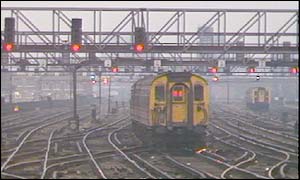 An "exceptional" number of leaves were on line Leaves on the line after October's heavy storm led to the one of the highest ever number of trains going past red signals on a single day in the UK. A total of 21 trains failed to stop at danger signals on 28 October, the day after the storm - the highest total since 1985. Slippery rail conditions caused by the "exceptional leaf fall" were to blame, according to the Health and Safety Executive (HSE). There were a further five instances where trains failed to stop at danger signals the following day. However, overall in October the number of "signals passed at danger" (SPADs) was 60, the third lowest October total in 15 years. Improved planning The storm led to hundreds of train cancellations and delays, lasting for several days. Railtrack investigated the rail industry's response to the exceptional weather, according to the HSE. "They have confirmed to the (HSE's) Railway Inspectorate that the main influence on the high number of SPADs on October 28 and 29 was leaf fall contamination in unexpected locations, and the resultant disruption to services," said the report. Railtrack has told the HSE the rail industry it must develop new emergency plans to deal with exceptional weather conditions. It recommends: The Train Protection & Warning System, which is being installed across the network, was triggered 20 times in October, the highest monthly total yet. The system is designed to reduce the consequences of trains going past red signals, by applying the brakes automatically if a train is going too fast on the approach to a red light. Of the October 2002 SPADs, 28 were considered serious compared with 17 in October last year. And 31 incidents were at signals with a previous history of having been passed at danger. In 14 cases, it was not the first time the driver had passed a signal at danger. | | See also:  04 Nov 02 | UK 03 Oct 02 | Business 27 Jul 01 | UK 29 Jun 01 | UK 28 Jun 01 | UK 28 Sep 00 | UK Internet links: The BBC is not responsible for the content of external internet sites Top UK stories now: Links to more UK stories are at the foot of the page. | ||||||||||||||||||||||||||||||||||||||||||||||||||||||||||||||||||||||||||||||||||||
| |
|  E-mail this story to a friend E-mail this story to a friend |
| |
| Links to more UK stories |
| | | ||
 | ||||
 | | Back to top
| ||
| ---------------------------------------------------------------------------------- To BBC Sport>> | To BBC Weather>> | To BBC World Service>> ---------------------------------------------------------------------------------- © MMIII | News Sources | Privacy |



