
|
 |
 | | | | | | ||||||||||||||||||||||||||||||||||||||||||||||||||||||||||||||||||||||||||||||||||||
| | | You are in: UK | ||||||||||||||||||||||||||||||||||||||||||||||||||||||||||||||||||||||||||||||||||||||
|
| | Monday, 4 November, 2002, 11:56 GMT Record low for rail signal incidents 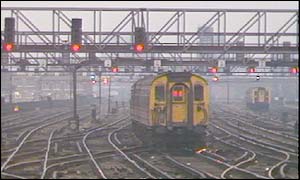 The HSE monitors signals passed at danger The number of train signals passed at danger in September 2002 was the lowest for any September since records began in 1985. The Health and Safety Executive (HSE) said there were 24 instances of signals passed at danger (Spads) in September 2002 - six fewer than during September the previous year. Eleven of the September 2002 Spads were regarded as serious - the same number as in the corresponding month the previous year. The total of 24 Spads in September 2002 was 19 fewer than the average figure for the month over the last six years. The HSE report said that one Spad caused a derailment. Falling Spads Thirteen of the 24 Spads were at signals with a previous Spad history, although in four of these cases the signal had not been passed at danger during the last five years. Two trains ran past the signal by more than 200 yards in the September 2002 incidents, while in four instances it was not the first time that the driver had passed a signal at danger. The importance of avoiding Spads was highlighted by the Ladbroke Grove train crash in 2000. The collision between a Thames Train and a Great Western express, which killed 31 people, had involved a signal passed at danger. HSE regularly monitors Spad incidents. A spokesperson told BBC News Online that the HSE was pleased with the improvement of Spad management by Railtrack and it was clear the number of incidents was decreasing. Automatic braking The HSE report also said that the Train Protection Warning System (TPWS) was activated six times in September 2002 - twice before the driver had a chance to take braking action and on four occasions when the driver was braking for a signal but was travelling too fast. The system is being gradually introduced across the whole rail network before 2004, replacing the Audio Warning System which activates as the driver passes through signals. The HSE has said that TPWS would have prevented the west London crash but safety campaigners have complained that it does not work on trains travelling at more than 70mph. | | See also:  03 Oct 02 | Business 27 Jul 01 | UK 29 Jun 01 | UK 28 Jun 01 | UK 28 Sep 00 | UK Internet links: The BBC is not responsible for the content of external internet sites Top UK stories now: Links to more UK stories are at the foot of the page. | ||||||||||||||||||||||||||||||||||||||||||||||||||||||||||||||||||||||||||||||||||||
| |
|  E-mail this story to a friend E-mail this story to a friend |
| |
| Links to more UK stories |
| | | ||
 | ||||
 | | Back to top
| ||
| ---------------------------------------------------------------------------------- To BBC Sport>> | To BBC Weather>> | To BBC World Service>> ---------------------------------------------------------------------------------- © MMIII | News Sources | Privacy |



