|
 |
 | | | | | | |||||||||||||||||||||||||||||||||||||||||||||||||||||||||||||||||||||||||||||||||||||||||||||||||||||||||||||||||||||||||||||||||||||||||||||||||||||||||||||||||||||||||||||||||
| | | You are in: South Asia | |||||||||||||||||||||||||||||||||||||||||||||||||||||||||||||||||||||||||||||||||||||||||||||||||||||||||||||||||||||||||||||||||||||||||||||||||||||||||||||||||||||||||||||||||||
|
| | Saturday, 5 October, 2002, 14:51 GMT 15:51 UK Nepal constitutional uncertainty 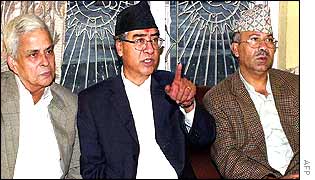 Sher Bahadur Deuba (centre): Move was unconstitutional
It is the first time in 12 years of multi-party democracy that the Nepalese monarch has sacked a serving prime minister. King Gyanendra said his decision to dismiss Sher Bahadur Deuba and assume executive powers was within the constitution.
The argument arises out differences in interpretation of Article 127, which gives the king powers to resolve a constitutional deadlock. Some experts say that the king cannot use this power without the prime minister's recommendation. Interpretation In fact, Prime Minister Deuba had asked the king to use powers based on this very article to defer the November elections by a year - the issue which led to the present crisis. The king rejected his request and instead sacked Mr Deuba for failing to stick to a timetable for the polls. King Gyanendra justified his move on the basis of another part of the constitution - Article 27 - which says that the king will preserve and protect the constitution. But the royal move has also been seen by some observers as endangering the constitution. Critics say that the move to summarily dismiss a prime minister and assume executive powers goes against the spirit of the democratic constitution which limits the power of the constitutional monarch. But a postponement of the polls would also have been constitutionally debatable. It would have allowed Mr Deuba to continue in office as a caretaker prime minister beyond the six months stipulated for an interim administration. A constitutional deadlock of some kind was therefore inevitable. | |
See also:  12 Sep 02 | Country profiles 04 Oct 02 | South Asia 04 Oct 02 | South Asia 25 Sep 02 | South Asia 11 Sep 02 | South Asia Top South Asia stories now: Links to more South Asia stories are at the foot of the page. | |||||||||||||||||||||||||||||||||||||||||||||||||||||||||||||||||||||||||||||||||||||||||||||||||||||||||||||||||||||||||||||||||||||||||||||||||||||||||||||||||||||||||||||||||
| |
|  E-mail this story to a friend E-mail this story to a friend |
| |
| Links to more South Asia stories |
| | | ||
 | ||||
 | | Back to top
| ||
| ---------------------------------------------------------------------------------- To BBC Sport>> | To BBC Weather>> | To BBC World Service>> ---------------------------------------------------------------------------------- © MMIII | News Sources | Privacy |