|
 |
 | | | | | | ||||||||||||||||||||||||||||||||||||||||||||||||||||||||||||||||||||||||||||||||||||||||||||||||||||||||||||||||||||||||||||||||||||||||||||||||||||||||||||||||||||||||||||||||||
| | | You are in: South Asia | ||||||||||||||||||||||||||||||||||||||||||||||||||||||||||||||||||||||||||||||||||||||||||||||||||||||||||||||||||||||||||||||||||||||||||||||||||||||||||||||||||||||||||||||||||||
|
| | Friday, 4 October, 2002, 10:29 GMT 11:29 UK Rebels condemn Nepal poll delay 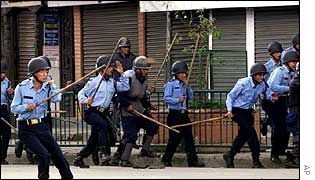 Security is being cited as reason for postponing the polls
Maoist rebels in Nepal have condemned the government's move to defer the November general elections. Prime minister Sher Bahadur Deuba on Thursday asked king Gyanendra to postpone the elections by a year due to security concerns caused by the long-running Maoist insurgency. But a top rebel leader has warned against such a move.
King Gyanendra has been engaged in political and legal consultations over Prime Minister Deuba's recommendation. He is expected to make a decision soon. Major opposition parties including the United Marxist-Leninist (UML)have backed the postponement of elections. Some others including the Nepali Congress led by former Prime Minister, Girija Prasad Koirala, have opposed it, saying that the parliament which Prime Minister Deuba dissolved last June should be restored. The Maoist rebels appear to have thrown their weight behind the supporters of the restoration of parliament. Dialogue demanded In a statement faxed to newspapers on Friday, the chairman of the Maoist communist party, Prachanda, said that the restoration of parliament ahead of a dialogue was the easy way out to resolve the current crisis.
Mr Prachanda accused the government of conspiring against the prospects of a negotiated solution. He said that the government wanted to escalate the long-running conflict by deferring the elections and forming a coalition government. He did not elaborate. However, he did reiterate his oft-repeated offer to resume peace talks for what he described as "a positive political solution". The government, which launched a military offensive against the rebels last year, had already rejected the offer, saying that the rebels were not sincere enough. The rebels unilaterally pulled out of a cease-fire and peace talks last year after three rounds of inconclusive rounds before resuming attacks on army barracks and police stations. Constitutional powers Under the Nepalese constitution, the caretaker prime minister's term in office cannot exceed six months and he has limited powers in restoring a dissolved parliament in the event of a delay in polls. King Gyanendra has the prerogative to untangle this complex issue and analysts say it is not clear which way he will go. There has also been speculation that the King may seek to revive the executive powers his late elder brother used to have. Any formal announcement by King Gyanendra is certain to be hotly debated. But analysts say the political future of Nepal is uncertain after it witnessed a series of tragedies in recent years. | |
See also:  18 Sep 02 | South Asia 16 Sep 02 | South Asia 11 Sep 02 | South Asia 07 Aug 02 | South Asia 19 Jun 02 | South Asia 05 Jun 02 | South Asia Internet links: The BBC is not responsible for the content of external internet sites Top South Asia stories now: Links to more South Asia stories are at the foot of the page. | ||||||||||||||||||||||||||||||||||||||||||||||||||||||||||||||||||||||||||||||||||||||||||||||||||||||||||||||||||||||||||||||||||||||||||||||||||||||||||||||||||||||||||||||||||
| |
|  E-mail this story to a friend E-mail this story to a friend |
| |
| Links to more South Asia stories |
| | | ||
 | ||||
 | | Back to top
| ||
| ---------------------------------------------------------------------------------- To BBC Sport>> | To BBC Weather>> | To BBC World Service>> ---------------------------------------------------------------------------------- © MMIII | News Sources | Privacy |