|
 |
 | | | | | | ||||||||||||||||||||||||||||||||||||||||||||||||||||||||||||||||||||||||||||||||||||||||||||||||||||||||||||||||||||||||||||||||||||||||||||||||||||||||||||||||||||||||||
| | | You are in: South Asia | ||||||||||||||||||||||||||||||||||||||||||||||||||||||||||||||||||||||||||||||||||||||||||||||||||||||||||||||||||||||||||||||||||||||||||||||||||||||||||||||||||||||||||||
|
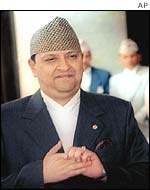
| | Wednesday, 5 June, 2002, 10:35 GMT 11:35 UK Nepal king wants vote on time A state of emergency was extended last month King Gyanendra of Nepal has called for general elections scheduled for November to be held on time. There have been persistent doubts that the vote will go ahead because Maoist rebels control large areas of the kingdom.
The BBC's Sushil Sharma says the king was seeking to dispel fears that a delay would deepen the constitutional crisis sparked by the dissolution of parliament last month.
"The institution of the monarchy is functioning within the constitutional framework and will continue to do so in the future," the king told Nepal's state-run news agency on Wednesday. "Our country, which in the past has been synonymous with peace, is choking in a spate of violence, terror and destruction. "We are still trying to find the underlying causes and will reach a constitutional resolution to the problem." Rare remarks The interview was only King Gyanendra's second since succeeding his brother last June. King Birendra was massacred along with eight other royals by an apparently drunken Crown Prince Dipendra, who then committed suicide. In the year since, fighting between troops and rebels has intensified, particularly after a state of emergency was imposed in November. The decision to call elections two years early was made after Prime Minister Sher Bahadur Deuba failed to secure the backing of MPs for an extension to the emergency. The present constitution guarantees multi-party democracy under a constitutional monarchy which the Maoists want to replace with a communist republic. The rebels have recently indicated a softening in their position, but it is not clear yet if they will participate in the November elections. | |
See also:  02 Jun 02 | South Asia 28 May 02 | South Asia 23 May 02 | South Asia 01 Jun 02 | South Asia 23 Apr 02 | Country profiles Internet links: The BBC is not responsible for the content of external internet sites Top South Asia stories now: Links to more South Asia stories are at the foot of the page. | ||||||||||||||||||||||||||||||||||||||||||||||||||||||||||||||||||||||||||||||||||||||||||||||||||||||||||||||||||||||||||||||||||||||||||||||||||||||||||||||||||||||||||
| |
|  E-mail this story to a friend E-mail this story to a friend |
| |
| Links to more South Asia stories |
| | | ||
 | ||||
 | | Back to top
| ||
| ---------------------------------------------------------------------------------- To BBC Sport>> | To BBC Weather>> | To BBC World Service>> ---------------------------------------------------------------------------------- © MMIII | News Sources | Privacy |