|
 |
 | | | | | | |||||||||||||||||||||||||||||||||||||||||||||||||||||||||||||||||||||||||||||||||||||||||||||||||||||||||||||||||||||||||||||||||||||||||||||||||||||||||||||||||||||||||||||||||
| | | You are in: South Asia | |||||||||||||||||||||||||||||||||||||||||||||||||||||||||||||||||||||||||||||||||||||||||||||||||||||||||||||||||||||||||||||||||||||||||||||||||||||||||||||||||||||||||||||||||||
|
| | Friday, 20 September, 2002, 16:32 GMT 17:32 UK Food follows peace in Sri Lanka 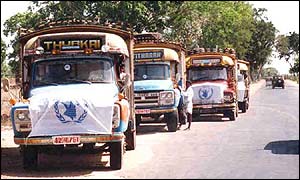 The UN has started to work in Tamil controlled areas Tamil refugees are flooding back to Sri Lanka's former conflict areas as the prospects for lasting peace begin to look brighter. More than 100,000 displaced people have voluntarily returned home to the island's north and east so far this year, the United Nations food agency says. The World Food Programme says it has started work in these areas to help rebuild communities devastated by war. Until a ceasefire between the government and Tamil Tigers and the opening moves of a peace process these were war zones, effectively no-go areas. Jeff Taft-Dick, country director for the WFP, told BBC News Online: "They have been neglected by any form of development for the past 19 years." Food for work
It is asking returnees, some of whom are former Tamil Tiger fighters, to take part in projects aimed at rebuilding roads, irrigation works, schools and health clinics destroyed during the civil war in return for food. In the latest scheme 150 people in Vavuniya North are rebuilding a small irrigation scheme for agricultural use. The WFP is particularly concerned about malnutrition in the conflict-affected areas, where up to 50% of children are underweight and 50% of women and adolescent girls have anaemia. Minefield According to Jeff Taft-Dick, the biggest obstacle to humanitarian work has been the issue of mines.
There is no comprehensive survey of where mines exist, and the WFP has had to be careful about where it works. Mines also pose a danger to people returning to the province. Mr Taft-Dick also suggests that the fact that neither the Sri Lankan Government nor the rebels are signatories to the 1997 Ottawa Treaty banning the use or production of landmines may put off some international donors. The government and Tamil Tiger rebels ended their first round of talks on Wednesday and issued a joint appeal for international aid. The government estimates that it needs $500 million to rebuild the war-torn north and east of the country. | |
See also:  19 Sep 02 | South Asia 15 Aug 02 | South Asia 15 Aug 02 | South Asia 25 May 02 | South Asia Internet links: The BBC is not responsible for the content of external internet sites Top South Asia stories now: Links to more South Asia stories are at the foot of the page. | |||||||||||||||||||||||||||||||||||||||||||||||||||||||||||||||||||||||||||||||||||||||||||||||||||||||||||||||||||||||||||||||||||||||||||||||||||||||||||||||||||||||||||||||||
| |
|  E-mail this story to a friend E-mail this story to a friend |
| |
| Links to more South Asia stories |
| | | ||
 | ||||
 | | Back to top
| ||
| ---------------------------------------------------------------------------------- To BBC Sport>> | To BBC Weather>> | To BBC World Service>> ---------------------------------------------------------------------------------- © MMIII | News Sources | Privacy |