|
 |
 | | | | | | |||||||||||||||||||||||||||||||||||||||||||||||||||||||||||||||||||||||||||||||||||||||||||||||||||||||||||||||||||||||||||||||||||||||||||||||||||||||||||||||||||||||||||||||||||||||||||
| | | You are in: South Asia | |||||||||||||||||||||||||||||||||||||||||||||||||||||||||||||||||||||||||||||||||||||||||||||||||||||||||||||||||||||||||||||||||||||||||||||||||||||||||||||||||||||||||||||||||||||||||||||
|
| | Thursday, 15 August, 2002, 17:11 GMT 18:11 UK Sri Lanka's displaced head home 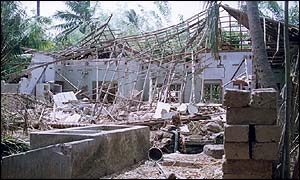 Sri Lanka's civil war has raged for nearly two decades
The United Nations refugee agency says more than 100,000 internally displaced people in Sri Lanka have returned home so far this year. Their return has been made possible by the current ceasefire between the government and Tamil Tiger rebels, which has restored freedom of movement across the former front lines.
More than half of the returning refugees have gone back to the northern Jaffna peninsula, but about 30,000 have moved within rebel territory to the main town there, Kilinochchi. The UN also says there are 1,000 Sri Lankan Tamils who have been repatriated from India, but at the moment it is not encouraging a mass return of the refugees there. Extreme poverty Assistant High Commissioner for Refugees Kamel Morjane, who has just toured the conflict areas, said he and his colleagues were shocked by what they saw in the north and east, which is home to 800,000 internally displaced people.
"But I must say that we were not expecting the level of destruction we have seen in this country, particularly in Jaffna." The UN says the refugees' needs are extremely large, and cannot be met by humanitarian organisations alone. Officials say the big development institutions and banks need to come forward to help. But, according to refugee officials, donors are interested in giving to Sri Lanka because it is a situation where they can contribute to a solution to the war. In the short term, the UNHCR says it is looking at contributing to government grants for those returning home because it is clear the authorities are lacking resources. And it says it will also supply agricultural tools, seeds and fishing equipment to help them rebuild their livelihoods. Catholic pilgrimage The small town of Madhu, in Tamil Tiger territory, received an influx of visitors this year for the annual church festival.
This year is the first in two decades that people have been able to travel to the shrine in such numbers, because of the ceasefire. The atmosphere was said to be highly emotional during the services, with worshippers praying for peace and weeping, their arms outstretched as the statue of Our Lady of Madhu was brought out of the church. The turnout exceeded the expectations of the rebel authorities, whose police force controlled traffic and law and order among the crowd. | |
See also:  15 Aug 02 | South Asia 15 Aug 02 | South Asia 28 Jul 02 | South Asia 14 Aug 02 | South Asia 25 May 02 | South Asia Internet links: The BBC is not responsible for the content of external internet sites Top South Asia stories now: Links to more South Asia stories are at the foot of the page. | |||||||||||||||||||||||||||||||||||||||||||||||||||||||||||||||||||||||||||||||||||||||||||||||||||||||||||||||||||||||||||||||||||||||||||||||||||||||||||||||||||||||||||||||||||||||||||
| |
|  E-mail this story to a friend E-mail this story to a friend |
| |
| Links to more South Asia stories |
| | | ||
 | ||||
 | | Back to top
| ||
| ---------------------------------------------------------------------------------- To BBC Sport>> | To BBC Weather>> | To BBC World Service>> ---------------------------------------------------------------------------------- © MMIII | News Sources | Privacy |