|
 |
 | | | | | | ||||||||||||||||||||||||||||||||||||||||||||||||||||||||||||||||||||||||||||||||||||||||||||||||||||||||||||||||||||||||||||||||||||||||||||||||||||||||||||||||||||||||
| | | You are in: South Asia | ||||||||||||||||||||||||||||||||||||||||||||||||||||||||||||||||||||||||||||||||||||||||||||||||||||||||||||||||||||||||||||||||||||||||||||||||||||||||||||||||||||||||||
|
| | Wednesday, 18 September, 2002, 12:52 GMT 13:52 UK Over 100 parties in Nepal election 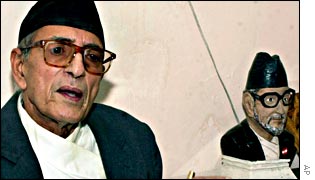 Mr Koirala (L) heads the mainstream Nepali Congress The Nepalese Election Commission has granted permission to more than 100 political parties to contest the parliamentary elections to due to be held in November. The number has increased by 23% since the last election. Meanwhile, the Commission has given Prime Minister Sher Bahadur Deuba one week to register a new party. The key election battle is expected to centre on less than a dozen parties including the two main rivals, the Nepali Congress and the left-wing United Marxist-Leninist (UML) party. Registration A spokesman of the Election Commission said 118 political parties have been registered for the election.
The move to allow Mr Deuba more time to form a party follows the commission's refusal to recognise his breakaway faction as the official Nepali Congress party. Mr Deuba split the party three months ago following differences over his plan to extend the state of emergency, imposed last year to tackle the long-running Maoist insurgency. He is now left with two choices: To float a new party or re-unite with the mainstream Nepali Congress, led by former Prime Minister, Girija Prasad Koirala. Undecided Mr Deuba has not yet decided on his next move, although there has been speculation about a reunification of the Congress party. This would stop the main rival, the UML, from taking advantage of the divided votes. The undivided Nepali Congress had a majority in the previous parliament with the UML as the main opposition. The election commission's spokesman, Tej Muni Bajracharya, told the BBC that the allotment of election symbols to the parties would begin soon. Slow start Following this, the otherwise slow momentum towards polling is expected to pick up, despite security concerns over the long-running Maoist insurgency. Maoist rebels, who have been fighting to replace the constitutional monarchy and multi-party democracy with a communist republic, have threatened to disrupt the elections. The authorities say security will be stepped up to foil the rebels' threat. Nepal has more than a 50,000-strong army and an equal number in the police force. The authorities say 15,000 retired soldiers will be recruited to bolster security during the elections. | |
See also:  17 Sep 02 | South Asia 16 Sep 02 | South Asia 12 Sep 02 | South Asia 11 Sep 02 | South Asia 10 Sep 02 | South Asia 12 Sep 02 | Country profiles 10 Sep 02 | South Asia Internet links: The BBC is not responsible for the content of external internet sites Top South Asia stories now: Links to more South Asia stories are at the foot of the page. | ||||||||||||||||||||||||||||||||||||||||||||||||||||||||||||||||||||||||||||||||||||||||||||||||||||||||||||||||||||||||||||||||||||||||||||||||||||||||||||||||||||||||
| |
|  E-mail this story to a friend E-mail this story to a friend |
| |
| Links to more South Asia stories |
| | | ||
 | ||||
 | | Back to top
| ||
| ---------------------------------------------------------------------------------- To BBC Sport>> | To BBC Weather>> | To BBC World Service>> ---------------------------------------------------------------------------------- © MMIII | News Sources | Privacy |