|
 |
 | | | | | | ||||||||||||||||||||||||||||||||||||||||||||||||||||||||||||||||||||||||||||||||||||||||||||||||||||||||||||||||||||||||||||||||||||||||||||||||||||||||||||||
| | | You are in: South Asia | ||||||||||||||||||||||||||||||||||||||||||||||||||||||||||||||||||||||||||||||||||||||||||||||||||||||||||||||||||||||||||||||||||||||||||||||||||||||||||||||||
|
| | Tuesday, 17 September, 2002, 11:56 GMT 12:56 UK Nepalese PM suffers political setback 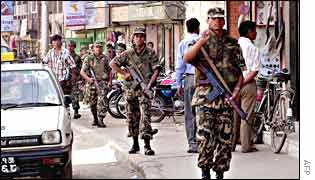 Unrest: Soldiers patrol after a strike call by rebels The Nepalese Prime Minister, Sher Bahadur Deuba, has suffered a major setback ahead of the parliamentary election. The country's election commission has refused to recognise Mr Deuba's breakaway faction as the official Nepali Congress party, less than two months before the elections. The elections are due to be held in November, two years ahead of schedule. Mr Deuba led the breakaway faction after the Congress split three months ago following his move to extend a state of emergency he had imposed to tackle the long-running Maoist insurgency. Mainstream After weeks of legal debates, the election commission decided to recognise the mainstream faction as the official Nepali Congress.
The Nepali Congress is led by Mr Deuba's rival and former Prime Minister, Girija Prasad Koirala. Although the election commission has remained silent on the party's election symbol and flag, experts say it has cleared the way for the Koirala faction to keep the traditional symbol, the tree, and the four-star flag. The election commission's decision leaves Prime Minister Deuba with two choices; to re-unite with the Koirala faction or set up a new political party. Re-unification Analysts believe re-unification of the two factions is now the most likely option. This would stop the main opposition, the United Marxist-Leninist (UML) party, from taking advantage of the divided votes. However, doubts about the election persist due to security concerns. The Maoist rebels, who last week launched heavy attacks on government targets killing more than 100 security personnel, have threatened to disrupt the polls. Determination The government has vowed to hold the elections at any cost and has proposed conducting elections in at least five phases. However, with polls only two months away, there has been no indication of public interest in a campaign yet. Security concerns and the indecision on the status of the country's largest party, the Nepali Congress, have been blamed for the situation. While the security concerns have not subsided, the election commission's verdict on the Nepali Congress dispute has cleared at least one uncertainty. | | See also:  12 Sep 02 | Country profiles 16 Sep 02 | South Asia 12 Sep 02 | South Asia 11 Sep 02 | South Asia 10 Sep 02 | South Asia 10 Sep 02 | South Asia Internet links: The BBC is not responsible for the content of external internet sites Top South Asia stories now: Links to more South Asia stories are at the foot of the page. | ||||||||||||||||||||||||||||||||||||||||||||||||||||||||||||||||||||||||||||||||||||||||||||||||||||||||||||||||||||||||||||||||||||||||||||||||||||||||||||||
| |
|  E-mail this story to a friend E-mail this story to a friend |
| |
| Links to more South Asia stories |
| | | ||
 | ||||
 | | Back to top
| ||
| ---------------------------------------------------------------------------------- To BBC Sport>> | To BBC Weather>> | To BBC World Service>> ---------------------------------------------------------------------------------- © MMIII | News Sources | Privacy |