|
 |
 | | | | | | |||||||||||||||||||||||||||||||||||||||||||||||||||||||||||||||||||||||||||||||||||||||||||||||||||||||||||||||||||||||||||||||||||||||||||||||||||||||||||||||||||||||||||||||||
| | | You are in: South Asia | |||||||||||||||||||||||||||||||||||||||||||||||||||||||||||||||||||||||||||||||||||||||||||||||||||||||||||||||||||||||||||||||||||||||||||||||||||||||||||||||||||||||||||||||||||
|
| | Monday, 16 September, 2002, 09:04 GMT 10:04 UK Nepal paralysed by Maoist strike 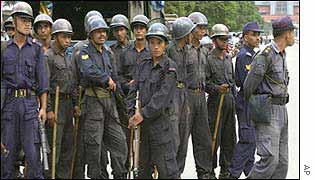 The police have struggled to control the Maoist rebels
Normal life in Nepal has been brought to a halt by a day's general strike called by the Maoist rebels to protest against November's general elections. Two people, including a policeman, were killed in separate incidents during the day. A spate of killings and explosions, allegedly caused by the rebels ahead of the strike, has deepened people's fears. Any defiance of such a strike normally invites violent attacks. Tight security was in place in major towns and commercial centres across the country to prevent any violence. Armed security personnel guarded government offices and patrolled the deserted streets, as most streets remained empty of traffic. 'Psychological build-up' Schools and businesses remained shut. Very few people ventured out on the streets leaving the normally crowded markets and congested roads in the capital, Kathmandu, and other major towns looking abandoned.
The strike was preceded by an upsurge in rebel attacks in remote hill villages last week, in which more than 100 people, most of them security personnel, had been killed. There had also been a series of minor explosions in several towns, though without major casualties or damage. These incidents were seen as a psychological build-up by the rebels to ensure a successful strike. The rebels have been protesting the planned general elections which they say will be a farce. November's elections have been called two years ahead of schedule. The government and mainstream political parties say elections are crucial to pulling the country out of the crisis caused by the long-running Maoist insurgency. More than 4,000 people have died in insurgency-related violence over the past six years. The rebels demand a new constitution which would replace Nepal's multi-party democracy and constitutional monarchy with a communist republic. | |
See also:  11 Sep 02 | South Asia 05 Jul 02 | South Asia 06 Jun 02 | South Asia 27 Mar 02 | South Asia 05 Jun 02 | South Asia Internet links: The BBC is not responsible for the content of external internet sites Top South Asia stories now: Links to more South Asia stories are at the foot of the page. | |||||||||||||||||||||||||||||||||||||||||||||||||||||||||||||||||||||||||||||||||||||||||||||||||||||||||||||||||||||||||||||||||||||||||||||||||||||||||||||||||||||||||||||||||
| |
|  E-mail this story to a friend E-mail this story to a friend |
| |
| Links to more South Asia stories |
| | | ||
 | ||||
 | | Back to top
| ||
| ---------------------------------------------------------------------------------- To BBC Sport>> | To BBC Weather>> | To BBC World Service>> ---------------------------------------------------------------------------------- © MMIII | News Sources | Privacy |