|
 |
 | | | | | | |||||||||||||||||||||||||||||||||||||||||||||||||||||||||||||||||||||||||||||||||||||||||||||||||||||||||||||||||||||||||||||||||||||||||||||||||||||||||||||||||||||||||||
| | | You are in: South Asia | |||||||||||||||||||||||||||||||||||||||||||||||||||||||||||||||||||||||||||||||||||||||||||||||||||||||||||||||||||||||||||||||||||||||||||||||||||||||||||||||||||||||||||||
|
| | Tuesday, 10 September, 2002, 09:05 GMT 10:05 UK Nepal lifts emergency 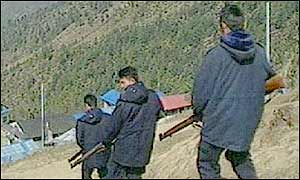 Security forces are far from having crushed the rebellion The Nepalese Government lifted a nine-month-old state of emergency at midnight on Wednesday ahead of parliamentary elections scheduled to begin in November.
As if to underline security fears, hours before the midnight deadline a bomb exploded at a major shopping complex in the capital, Kathmandu, causing damage but injuring nobody. Nepalese forces say they have inflicted heavy casualties on the rebels since the emergency began.
Critics at home and abroad have condemned the emergency's strict provisions - under which many civilians have been arbitrarily arrested, they say. But Prime Minister Sher Bahadur Deuba has secured the support of many neighbouring and Western countries for his anti-Maoist strategy. Uncertainty The BBC's Sushil Sharma in Kathmandu says there is some uncertainty over whether the emergency might be re-imposed or not.
However, a senior minister, Chiranjivi Wagle, told reporters on Wednesday that in the light of the security situation, a final decision would be taken next week. Our correspondent says a number of recent rebel attacks on government and civilian targets across the country could be used by Kathmandu to justify extending the emergency. High-security polls The rebels have already vowed to disrupt the polls and warned people not to take part. Security has been high on the government's electoral agenda as a result. Junior Interior Minister DR Kandel told the Reuters news agency that voting would be held in six phases to help government forces ensure security across Nepal's five administrative areas. "The whole process will take two-and-a-half months," he said. "We will have security in each of the five regions. "It will take time to move the forces in the remote parts." | |
See also:  05 Jul 02 | South Asia 06 Jun 02 | South Asia 27 Mar 02 | South Asia 05 Jun 02 | South Asia Internet links: The BBC is not responsible for the content of external internet sites Top South Asia stories now: Links to more South Asia stories are at the foot of the page. | |||||||||||||||||||||||||||||||||||||||||||||||||||||||||||||||||||||||||||||||||||||||||||||||||||||||||||||||||||||||||||||||||||||||||||||||||||||||||||||||||||||||||||
| |
|  E-mail this story to a friend E-mail this story to a friend |
| |
| Links to more South Asia stories |
| | | ||
 | ||||
 | | Back to top
| ||
| ---------------------------------------------------------------------------------- To BBC Sport>> | To BBC Weather>> | To BBC World Service>> ---------------------------------------------------------------------------------- © MMIII | News Sources | Privacy |