|
 |
 | | | | | | ||||||||||||||||||||||||||||||||||||||||||||||||||||||||||||||||||||||||||||||||||||||||||||||||||||||||||||||||||||||||||||||||||||||||||||||||||||||||||||||||||||||||||||||||||||||
| | | You are in: South Asia | ||||||||||||||||||||||||||||||||||||||||||||||||||||||||||||||||||||||||||||||||||||||||||||||||||||||||||||||||||||||||||||||||||||||||||||||||||||||||||||||||||||||||||||||||||||||||
|
| | Wednesday, 19 June, 2002, 14:50 GMT 15:50 UK Eyewitness: Meeting Nepal's Maoists The rebels scorn government claims of military success
Walking through the newly planted rice paddies of Rolpa, a remote district in western Nepal, we could see a village volleyball game in progress.
Maybe the fiery red banner flapping in the midday breeze was a welcome banner from the Communist Party, I said. As we drew nearer, we realised that dozens of young men and women with rifles and machine guns were cheering on the players. We had stumbled into a gathering of Nepal's Maoist rebels, whose "Peoples War" has claimed about 4,000 lives in the past six years. Blank disbelief It was clear that our hosts were as surprised as we were. As we smiled and nodded and tried to look pleasant and unthreatening to the young fighters, they stared at us, mouths gaped open, and whispered to each other.
No one reached for a weapon, so we walked over to a low wall by the school and rested our rucksacks. Then came a torrent of questions in Nepali, which Kanak answered politely, trying not to show nervousness. Again, there was no sense of threat, just blank disbelief and a few glances at the TV camera under my arm. Later, a senior commander told us that we'd been lucky. Telling us to call him Comrade Bijaya, the Rolpa district committee member of the Maoist party said the army had been using plainclothes people, and some activists have been shot. "Since we didn't know you were coming, how could we be sure? Now we believe that you're journalists and you're welcome here," he said. Fight to the death Comrade Bijaya told us he was more of a political instructor than a fighter, but he said all Maoists were ready to die for the revolution.
"We know that death is just part of the process. These fighters have been at most of the major battles so far and they've survived. They're combat hardened and they will fight to the death," he said. Our journey to this distant Maoist village began along the road to Rolpa's district capital, Libang. Theoretically, the road is held by the security forces but bus drivers say they won't drive at night because they fear being shot by the police. We saw just a single army checkpoint along the road, and no evidence of the police short of Libang town itself. Pleas for peace Walking up river valleys and over ridges, the constant refrain of the populace is a plea for peace, and for development.
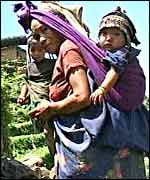
"This isn't a poor country," Kanak said, looking around at the lush rice paddies and forest. "But it's a long way from Kathmandu and that distance has caused deep political alienation. These people don't know who to trust," he said. One old man - who had worked in India for nearly 40 years before coming home to Rolpa - said villagers were caught between a rock and hard place. "The army wants our support, the Maoists demand it, and what we want is peace," he said, showing us a temple that he said had been smashed by hardcore Maoist ideologues several years earlier. Some spoke of houses destroyed by the security forces; others of human rights abuses on both sides. At one point, a Royal Nepal Army helicopter flew overhead but it was so high that little would have been visible on the ground. Determination Comrade Bijaya scorned recent claims by the authorities of major successes against the Maoists. "They say they've killed hundreds, thousands of us, yet this company in front of you has fought many times and lost just some comrades," he said. "We will win, not just in Nepal, but around the world, no matter what happened to Maoism in China." Kanak, who was on his first trip to meet actual Maoist fighters, was impressed by the guerrillas determination but sceptical about their future. "They see everything here through the prism of local success in Rolpa," he said. "I think they underestimate the resolve of the Nepali state and the resources the authorities can call upon, both from their own coffers and the international community." | |
See also:  19 Jun 02 | South Asia 14 Jun 02 | South Asia 27 May 02 | South Asia 04 Apr 02 | South Asia Internet links: The BBC is not responsible for the content of external internet sites Top South Asia stories now: Links to more South Asia stories are at the foot of the page. | ||||||||||||||||||||||||||||||||||||||||||||||||||||||||||||||||||||||||||||||||||||||||||||||||||||||||||||||||||||||||||||||||||||||||||||||||||||||||||||||||||||||||||||||||||||||
| |
|  E-mail this story to a friend E-mail this story to a friend |
| |
| Links to more South Asia stories |
| | | ||
 | ||||
 | | Back to top
| ||
| ---------------------------------------------------------------------------------- To BBC Sport>> | To BBC Weather>> | To BBC World Service>> ---------------------------------------------------------------------------------- © MMIII | News Sources | Privacy |