|
 |
 | | | | | | |||||||||||||||||||||||||||||||||||||||||||||||||||||||||||||||||||||||||||||||||||||||||||||||||||||||||||||||||||||||||||||||||||||||||
| | | You are in: Science/Nature | |||||||||||||||||||||||||||||||||||||||||||||||||||||||||||||||||||||||||||||||||||||||||||||||||||||||||||||||||||||||||||||||||||||||||||
|
| | Thursday, 19 December, 2002, 19:26 GMT Small molecule 2002's major find  The discovery that molecules called small RNAs control much of a gene's behaviour - which may further research on cancer and stem cells - has been cited as this year's big breakthrough. Every December, Science magazine produces its highlights of the year and according to the journal's editors, 2002's most significant advance concerned these overlooked molecules. It has been a vintage year for research, the editors believe. They salute major advances in the biological and physical sciences, including the new, sharper views obtained of the cosmos and a fascinating discovery that may change our view of the origin of humans. Genetic control Until recently, RNA was thought to do little more than carry out DNA's instructions for building proteins. However, the new picture, which Science says came into focus this year, shows small RNAs at the heart of many of the cell's genetic workings.
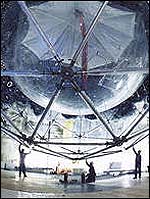
Small RNAs can switch genes on and off, and even remove unwanted sections of DNA. One of the most significant findings in 2002 was that small RNAs take charge during cell division, shepherding the material in chromosomes into the right configuration. Researchers say this discovery raises the possibility that these processes may go wrong in certain diseases, producing cancer-causing mutations, for example. From the Sun's heart Research in 2002 also solved a longstanding mystery about some of the least understood particles in the Universe: neutrinos. They come in three varieties, including electron neutrinos that are produced in the Sun's core by its nuclear furnace.
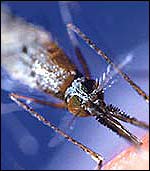
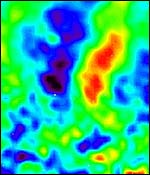
In 2002, evidence from the Sudbury Neutrino Observatory in Canada confirmed that the "missing" electron neutrinos change into the other neutrino types en route to Earth. 2002 also marked the first year that scientists announced genome sequences for organisms with major agriculture and public health relevance for the developing world. The sequences of the indica rice sub-species and the short grain japonica sub-species may help efforts to improve rice's nutritional quality and crop yield. During the year, the malaria parasite, Plasmodium falciparum, and the mosquito that carries it, Anopheles gambiae, also provided information that may make it possible to develop novel mosquito repellents, insecticides, and mosquito vaccines. In the background New observations of the relic radiation from just after the Big Bang have allowed new insights into the Universe's past and future. The Cosmic Microwave Background (CMB) appears to us now as faint microwave static coming from all regions of the sky, but just 400,000 years after the Big Bang, it was high-energy radiation emitted in a cosmos that had yet to form stars and Galaxies.
Additional discoveries in 2002 helped explain why spicy food feels hot, and breath mints give the mouth a chill. Researchers identified several proteins, embedded in the surfaces of certain cells, that respond to certain chemical and changes in temperature. Researchers also caught a glimpse of electrons whizzing around atoms, and made it into a movie. The high-speed film-making technique relies on ultra short pulses of laser light to freeze motion in frames just attoseconds (billionths of a billionth of a second) apart. Body clock In 2002, several research teams investigated a new class of light-responsive cells in the retinas of mammals. These cells help reset the body's daily, or "circadian", clock, making it a critical part of human physiology.
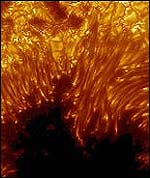
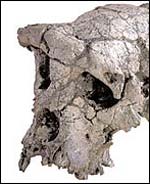
During the year, new technology countered the blurring effect of Earth's atmosphere on telescopes' view of the heavens. The result, enabled by the flexing of thin mirrors hundred of times each second, was a suite of space images crisper than any taken before. Those images included the best evidence yet of a supermassive black hole at our galaxy's heart. Other images included a volcanic eruption on Jupiter's moon Io, and ultra-clear pictures of the Sun's surface. A technology for taking three-dimensional pictures of a cell overcame key technical obstacles in 2002, providing insights into how the cell's machinery carries out some of the basic processes of life. Oldest hominid In 2002, researchers overturned some fundamental ideas about human evolution.
The location of the skull, by the ancient Lake Chad in western Africa, was a surprise. Until now, humans' earliest ancestors had been found in east Africa. The skull's features look like a mix of chimpanzee, gorilla, and human, leading the researchers to classify their discovery as an altogether new genus and species of hominid - although some researchers disagree. | | See also:  13 May 99 | Science/Nature 22 Apr 02 | Science/Nature 04 Apr 02 | Science/Nature 24 May 02 | Science/Nature 02 Oct 02 | Science/Nature 13 Nov 02 | Science/Nature 10 Jul 02 | Science/Nature Top Science/Nature stories now: Links to more Science/Nature stories are at the foot of the page. | |||||||||||||||||||||||||||||||||||||||||||||||||||||||||||||||||||||||||||||||||||||||||||||||||||||||||||||||||||||||||||||||||||||||||
 | |
|  E-mail this story to a friend E-mail this story to a friend |
| |
| Links to more Science/Nature stories |
| | | ||
 | ||||
 | | Back to top
| ||
| ---------------------------------------------------------------------------------- To BBC Sport>> | To BBC Weather>> | To BBC World Service>> ---------------------------------------------------------------------------------- © MMIII | News Sources | Privacy |