|
 |
 | | | | | | |||||||||||||||||||||||||||||||||||||||||||||||||||||||||||||||||||||||||||||||||||||||||||||||||||||||||||||||||||||||||||||||||||||||||||||||||||||||||||||||||||
| | | You are in: Science/Nature | |||||||||||||||||||||||||||||||||||||||||||||||||||||||||||||||||||||||||||||||||||||||||||||||||||||||||||||||||||||||||||||||||||||||||||||||||||||||||||||||||||||
|
| | Wednesday, 13 November, 2002, 19:01 GMT Close up on sunspots 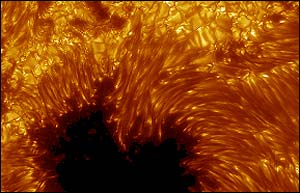 The Sun's surface in unprecedented detail
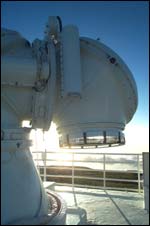
They were obtained by the new Swedish 1-metre solar telescope on the Canary Island of La Palma. The images show new solar features and hitherto unknown details in sunspots.
Published in the journal Nature, the new observations realise a long-stated goal for solar observers to see the solar surface at a resolution better than 100 kilometres. It is believed that fundamental processes in the Sun's atmosphere take place on such scales.
To obtain the detailed view, the telescope's tube is evacuated and a mirror in the beam adjusts its shape a thousand times a second to counteract atmospheric blurring. Sunspots are regions with strong magnetic fields. A sufficiently large sunspot consists of a dark umbra, which is the coolest part of a sunspot, surrounded by a brighter penumbra. The penumbra appears to consist of thin, long filaments that have remained unresolved by solar telescopes until now. | | See also:  07 Nov 01 | Science/Nature 22 Sep 00 | Science/Nature 15 Nov 99 | Science/Nature Internet links: The BBC is not responsible for the content of external internet sites Top Science/Nature stories now: Links to more Science/Nature stories are at the foot of the page. | |||||||||||||||||||||||||||||||||||||||||||||||||||||||||||||||||||||||||||||||||||||||||||||||||||||||||||||||||||||||||||||||||||||||||||||||||||||||||||||||||||
| |
|  E-mail this story to a friend E-mail this story to a friend |
| |
| Links to more Science/Nature stories |
| | | ||
 | ||||
 | | Back to top
| ||
| ---------------------------------------------------------------------------------- To BBC Sport>> | To BBC Weather>> | To BBC World Service>> ---------------------------------------------------------------------------------- © MMIII | News Sources | Privacy |