|
 |
 | | | | | | ||||||||||||||||||||||||||||||||||||||||||||||||||||||||||||||||||||||||||||||||||||||||||||||||||||||||||||||||||||||||||||||||||||||||||||||||||||||||||||
| | | You are in: Science/Nature | ||||||||||||||||||||||||||||||||||||||||||||||||||||||||||||||||||||||||||||||||||||||||||||||||||||||||||||||||||||||||||||||||||||||||||||||||||||||||||||||
|
| | Friday, 27 December, 2002, 07:23 GMT Countdown for voyage to comet  Rosetta will chase a comet (Astrium)
Rosetta is set to take off from South America on the night of 12 January for a nine-year-voyage past the planets.
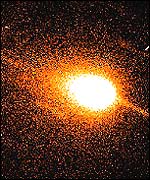
The maiden flight of the new heavy-lift Ariane 5 ended in disaster when it exploded over the Atlantic Ocean. The first aim of the inquiry is to find out whether it has any implications for Rosetta, which is due to be launched on the basic version of the rocket. Rosetta must be launched by the end of January if it is to reach its destination, Comet Wirtanen. "If it doesn't launch we are in deep trouble," Dr Rita Schulz of the European Space Agency (Esa), deputy project scientist for the Rosetta mission, said. "There is no back-up target." Building blocks The Esa probe must skirt the Earth twice and Mars once to gather the power to chase the comet. It will catch up with the large, "dirty snowball" in the dark depths of the Solar System where it will try to land a robot on a comet for the first time.
Professor David Southwood, director of science at Esa, said the idea of a spacecraft being able to orbit and land on a comet was remarkable. He told BBC News Online: "Comets, we believe, are the building blocks of the Solar System - so to go out and 'scratch and sniff'' a comet is going to take us back to the beginning where we all came from." Long odyssey The journey to Wirtanen is the furthest journey for a spacecraft powered only by the Sun. Its destination comet was discovered in 1948 by Carl Wirtanen of the Lick Observatory in California. Wirtanen is one of a group of comets whose paths are influenced by Jupiter, the largest planet in the Solar System.
The discovery of the basalt stone slab, written at the beginning of the 2nd century BC, unlocked the secrets of ancient Egyptian writing. Scientists hope that Rosetta will provide a similar insight into the ancient history of space and the planets. Fleeting glimpse Comets are the leftovers of the stuff that formed the Earth, Moon and planets 4.5 billion years ago. Previous spacecraft have encountered the space bodies now and again but have been able to get only a fleeting glimpse of their make-up.
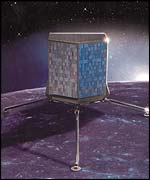
"The big difference with Rosetta is that it will actually join the nucleus of the comet as it travels in towards the Sun from the cold parts of the Solar System." Rosetta will reach the comet at its farthest point from the Sun, around November 2011. The spacecraft will drop a lander on to its nucleus and will chase Wirtanen as it speeds towards the Sun. Rosetta will then orbit the comet, scanning its surface for an entire year, as it moves closer to the star. Instruments on board the spacecraft will study the dust and gas particles that surround the comet and trail behind it as streaming tails. They will measure the chemical composition of gases given off as ices evaporate and capture images of the centre of the comet as it melts. Many of the molecules that are given off by the nucleus cannot be seen using telescopes. "There's a good chance that Rosetta will be able to detect molecules that haven't been detected before because they are so unstable," said Dr Jones. Perilous landing The most exciting part of the mission will be the attempt to land a robotic probe on the icy heart of the comet. It is hoped that the main orbiter will be able to get to about one kilometre from Wirtanen before releasing the lander.
"Because the nucleus is so small, the pull of gravity will be extremely weak," explained Dr Jones. "It will be more like a docking than a landing." This sort of manoeuvre has only been tried once before, when the Nasa spacecraft Near landed on the asteroid Eros. Eros is much bigger, though, than Wirtanen, so exerts a bigger pull. Furthermore, nobody knows whether the heart of a comet is soft, slushy stuff or hard ice. "We don't know what it's like to stand on the nucleus of a comet - what the landscape would look like," he said. "Just that is exciting in itself. "For years people have discussed if the nucleus is a hard, icy surface or if it is covered in fluffy snow. "Finally, we will learn what the truth is." | |
See also:  12 Dec 02 | Science/Nature 13 Jan 03 | Science/Nature 26 Sep 01 | Science/Nature 23 Sep 01 | Science/Nature 05 Jul 01 | Science/Nature 27 May 01 | Science/Nature Internet links: The BBC is not responsible for the content of external internet sites Top Science/Nature stories now: Links to more Science/Nature stories are at the foot of the page. | ||||||||||||||||||||||||||||||||||||||||||||||||||||||||||||||||||||||||||||||||||||||||||||||||||||||||||||||||||||||||||||||||||||||||||||||||||||||||||||
 | |
|  E-mail this story to a friend E-mail this story to a friend |
| |
| Links to more Science/Nature stories |
| | | ||
 | ||||
 | | Back to top
| ||
| ---------------------------------------------------------------------------------- To BBC Sport>> | To BBC Weather>> | To BBC World Service>> ---------------------------------------------------------------------------------- © MMIII | News Sources | Privacy |






 Rosetta will join the nucleus of the comet as it travels in towards the Sun from the cold parts of the Solar System