|
 |
 | | | | | | |||||||||||||||||||||||||||||||||||||||||||||||||||||||||||||||||||||||||||||||||||||||||||||||||||||||||||||||||||||||||||||||||||||||||||||||||||||||||||||||||||||||||||||||||||||||||||||||||||||
| | | You are in: Science/Nature | |||||||||||||||||||||||||||||||||||||||||||||||||||||||||||||||||||||||||||||||||||||||||||||||||||||||||||||||||||||||||||||||||||||||||||||||||||||||||||||||||||||||||||||||||||||||||||||||||||||||
|
| | Thursday, 12 December, 2002, 15:11 GMT Mystery over rocket failure 
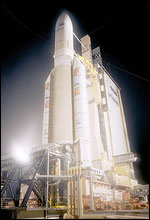
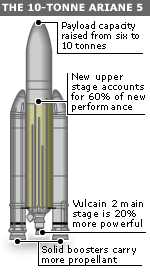
At a press conference held by rocket operator Arianespace in Kourou, French Guiana, officials said they were establishing an independent commission to look into the accident of Flight 157. Engineers said there were problems reported during the flight from the new Vulcain-2 rocket motor but they are at present unsure if that was the cause of the failure. Current difficulties Officials were adamant that the next flight of Ariane 5, using a "classical" non-enhanced version of the booster, would go ahead in January when the Rosetta comet lander would be launched. They said the launch of a satellite on an Ariane 4 next Tuesday would also proceed as normal. "The Flight 157 failure has not affected Arianespace's determination to move ahead and to overcome our difficulties," Arianespace chief executive officer Jean-Yves Le Gall said. "We will not change our overall strategy, and we are confident about the future." Pressure problems At the press conference, Arianespace officials went through the facts of the failure, as they are currently known.
From 178 seconds into the flight to 186 seconds, the engine speed changed and "a significant flight control perturbation occurred". At 187 seconds, the faring covering the payload was jettisoned, as expected. At 196 seconds, a major problem developed in the Vulcain-2 engine but engineers are unsure if its failure was due to a fault inside the rocket engine or in its environment. The rocket was then in an "erratic trajectory" and started to fall from its altitude of 150 km. Self-destruct system At 456 seconds, it had fallen to just 69 km when its auto-destruct mechanism activated.
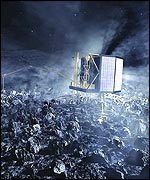
This has raised hopes that the boosters can be recovered and examined to see if they contain any clues to the failure. A search for them is underway. Officials were keen to point out that the January launch of the Rosetta comet mission would go ahead as it is using the "classical" version of Ariane 5 and not the beefed-up version that had failed on Wednesday night. Weeks away Rosetta, which will land a spacecraft on Comet Wirtanen, has to take off during a short window starting on 12 January.
Two launches of the enhanced Ariane 5 were planned for 2003. At present, they have not officially been postponed as the accident commission is expected to deliver its findings in a few weeks, allowing plenty of time for decisions to be made about forthcoming flights. The Ariane 5-ECA was carrying Stentor, an experimental telecommunications satellite for the French space agency, CNES, and Hot Bird7, a Eutelsat television broadcast satellite. Both satellites were insured. | |
See also:  12 Dec 02 | Science/Nature 12 Dec 02 | Science/Nature 12 Dec 02 | Science/Nature 12 Dec 02 | Science/Nature 21 Nov 02 | Science/Nature 21 Aug 02 | Science/Nature Internet links: The BBC is not responsible for the content of external internet sites Top Science/Nature stories now: Links to more Science/Nature stories are at the foot of the page. | |||||||||||||||||||||||||||||||||||||||||||||||||||||||||||||||||||||||||||||||||||||||||||||||||||||||||||||||||||||||||||||||||||||||||||||||||||||||||||||||||||||||||||||||||||||||||||||||||||||
|  |
|  E-mail this story to a friend E-mail this story to a friend |
 | |
| Links to more Science/Nature stories |
| | | ||
 | ||||
 | | Back to top
| ||
| ---------------------------------------------------------------------------------- To BBC Sport>> | To BBC Weather>> | To BBC World Service>> ---------------------------------------------------------------------------------- © MMIII | News Sources | Privacy |