|
 |
 | | | | | | ||||||||||||||||||||||||||||||||||||||||||||||||||||||||||||||||||||||||||||||||||||||||||||||||||||||||||||||||||||||||||||||||||||||||||||||||||||||||||||||||||||||||||||||||||||
| | | You are in: Science/Nature | ||||||||||||||||||||||||||||||||||||||||||||||||||||||||||||||||||||||||||||||||||||||||||||||||||||||||||||||||||||||||||||||||||||||||||||||||||||||||||||||||||||||||||||||||||||||
|
| | Thursday, 12 December, 2002, 11:37 GMT Ariane 5: A short history
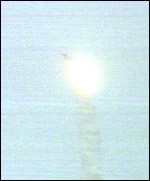
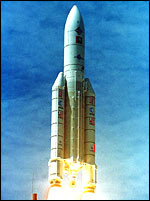
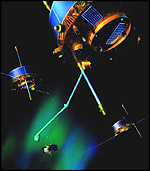
Arianespace dominates the world satellite launch market with more than half of all commercial orders. The new rocket was designed to maintain and extend that position just as the company began to phase out its older Ariane 4 vehicle. Engineers at the Kourou spaceport in French Guiana will be hoping to diagnose and correct the fault that led to Wednesday's loss as soon as possible, so that flights can be resumed. Commercial start The Ariane 5-ECA is a beefed-up version of the generic launcher that first flew in 1996. That maiden flight also ended in disaster when the rocket self-destructed 40 seconds into launch. A European science mission called Cluster was lost in the explosion - although its satellites were rebuilt and sent up on Russian rockets four years later.
The payload on that occasion was Europe's biggest and most expensive science satellite ever built - the Newton X-ray Observatory. The successful insertion of the telescope into its correct orbit was then followed by a series of launches that passed without major incident. Wrong orbits But the Ariane 5 programme then hit trouble again last year when it failed to get two satellites to their correct altitudes.
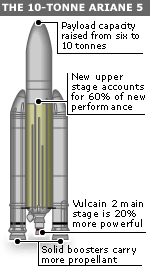
The setback led to the Ariane 5 being grounded for seven months while engineers analysed and corrected the fuel problem that led the upper stage of the rocket to cut out early. Flights resumed in March when the Envisat, an environment-monitoring satellite, was put in its polar orbit. Better performance The Ariane 5 has two solid boosters to lift it off the launch pad, a cryogenic main stage to do most of the work of getting into orbit, and an upper stage to place the satellites in the target orbit, in most cases a geostationary transfer orbit of up to 36,000 kilometres from where the satellites' onboard propulsion systems take them into their final positions.
This greater payload capacity, combined with the ability to carry and deploy several satellites at once, should reduce launch costs for satellite customers. But to achieve the extra performance, the Ariane 5 had to have its main components upgraded. The solid boosters carry more propellant and the main Vulcain cryogenic engine has been modified to improve its combustion of liquid oxygen and hydrogen. The main difference, however, is the introduction of a new upper stage (ESC-A) based on tried and tested technologies used on the much older Ariane 4 launcher. Software errors The Ariane 5's mission history now comprises 14 flights. Two have been explosive failures: the first and Wednesday night's launches ended when self-destruct mechanisms were triggered by major failures on the rockets. And two launches, in 1997 and 2001, put satellites in their wrong orbits. The independent inquiry board set up to investigate the first explosive failure said the flight control system failed because of errors in computer software design. The rocket had no idea where it was and veered sharply off course before being blown up four kilometres above the ground. Wednesday's explosion occurred at a substantially higher altitude, three minutes into the flight. The Ariane 5-ECA (ESC-A) is due to be relieved by the Ariane 5-ECA (ESC-B) in 2006. This development launcher will take 12 tonnes towards geostationary orbit. The old Ariane 4 only has two remaining flights scheduled, one of which is due to take place next week. Arianespace needs to get its primary launcher back in operation as soon as possible. The US companies Boeing and Lockheed Martin have both recently sent up new vehicles that will aim to challenge the European rocket. | |
See also:  12 Dec 02 | Science/Nature 21 Nov 02 | Science/Nature 12 Dec 02 | Science/Nature 21 Aug 02 | Science/Nature Internet links: The BBC is not responsible for the content of external internet sites Top Science/Nature stories now: Links to more Science/Nature stories are at the foot of the page. | ||||||||||||||||||||||||||||||||||||||||||||||||||||||||||||||||||||||||||||||||||||||||||||||||||||||||||||||||||||||||||||||||||||||||||||||||||||||||||||||||||||||||||||||||||||
|  |
|  E-mail this story to a friend E-mail this story to a friend |
 | |
| Links to more Science/Nature stories |
| | | ||
 | ||||
 | | Back to top
| ||
| ---------------------------------------------------------------------------------- To BBC Sport>> | To BBC Weather>> | To BBC World Service>> ---------------------------------------------------------------------------------- © MMIII | News Sources | Privacy |