|
 |
 | | | | | | ||||||||||||||||||||||||||||||||||||||||||||||||||||||||||||||||||||||||||||||||||||||||||||||||||||||||||||||||||||||||||||||||||||||||||||||||||||||||||||||||||||||||||||||||||||
| | | You are in: Science/Nature | ||||||||||||||||||||||||||||||||||||||||||||||||||||||||||||||||||||||||||||||||||||||||||||||||||||||||||||||||||||||||||||||||||||||||||||||||||||||||||||||||||||||||||||||||||||||
|
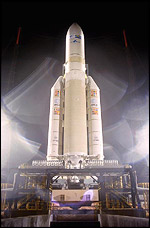
| | Thursday, 12 December, 2002, 03:10 GMT Blow to launcher market  There is currently a glut of launchers The loss of the new Ariane 5 is a major setback for Europe and its hopes to emerge from the current depression in the satellite launch market. Even if Wednesday's blast-off had been successful, the new vehicle would have struggled to find the orders anticipated for it just a few years ago.
In the long term, however, everyone in the industry will feel the fallout because insurance premiums are likely to rise. Calls are already being heard for a form of self-insurance where risk is shared among rocket manufacturers because premiums from insurers may become too expensive. Reducing costs Back in the tech boom of the 1990s, clients were demanding vehicles capable of launching ever heavier geostationary telecommunications satellites - from 2.5 to five tonnes and beyond.
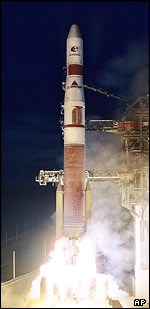
Nonetheless, the new Ariane 5-ECA was hoping to find success. It was designed to carry 10 tonnes towards geostationary orbit. The ability to deliver several satellites at once was also incorporated to reduce costs to customers. Further development was supposed to see an Ariane 5 in 2006 with a capacity to shoot 12 tonnes towards geostationary orbit. Wednesday's setback will now threaten Arianespace's dominant position in the commercial market. Optimistic outlook Boeing and Lockheed Martin of the United States depend, in the main, on military orders. They could now find more private customers for their new big rockets. Lockheed Martin put up its Atlas 5 vehicle in August. Boeing launched the first of its Delta 4 series rockets last month.
Some industry analysts say that while the overall market for satellite launches is likely to be flat for some time, a recovery could take place in the last half of this decade as satellites are renewed. An expected increase in demand for broadband internet services could also translate into increased demand for satellite launches, and there are some signs that the European military is now becoming more interested in satellite technology. Insurance problem Rachel Villain, executive vice president for a Paris-based space consultancy, Euroconsult, said Wednesday's loss would have a major impact on the companies that insure and underwrite satellite launches.
"I think that will put them really in big trouble. Some will exit the space market, perhaps." Space launch insurers, who work on a mutual basis, were expecting premiums of $370 million dollars this year, for risk coverage of between 800 and a billion dollars, she told the AFP news agency. | |
See also:  12 Dec 02 | Science/Nature 21 Nov 02 | Science/Nature 21 Aug 02 | Science/Nature Internet links: The BBC is not responsible for the content of external internet sites Top Science/Nature stories now: Links to more Science/Nature stories are at the foot of the page. | ||||||||||||||||||||||||||||||||||||||||||||||||||||||||||||||||||||||||||||||||||||||||||||||||||||||||||||||||||||||||||||||||||||||||||||||||||||||||||||||||||||||||||||||||||||
|  |
|  E-mail this story to a friend E-mail this story to a friend |
 | |
| Links to more Science/Nature stories |
| | | ||
 | ||||
 | | Back to top
| ||
| ---------------------------------------------------------------------------------- To BBC Sport>> | To BBC Weather>> | To BBC World Service>> ---------------------------------------------------------------------------------- © MMIII | News Sources | Privacy |




 It's been a very bad year for commercial insurers