|
 |
 | | | | | | ||||||||||||||||||||||||||||||||||||||||||||||||||||||||||||||||||||||||||||||||||||||||||||||||||||||||||||||||||||||||||||||||||||||||||||
| | | You are in: Science/Nature | ||||||||||||||||||||||||||||||||||||||||||||||||||||||||||||||||||||||||||||||||||||||||||||||||||||||||||||||||||||||||||||||||||||||||||||||
|
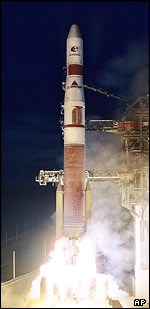
| | Thursday, 21 November, 2002, 10:13 GMT Blast-off for Boeing hopes 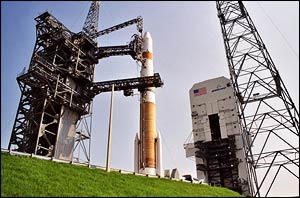 The Delta 4 is operating in a crowded market The Boeing's newest and most powerful rocket, the Delta 4, has finally blasted off from Cape Canaveral in Florida, US. The vehicle lifted clear of the launch pad at 1739 local time (2239 GMT) on Wednesday on a mission to deliver a European telecommunications satellite into orbit.
The biggest version of the rocket will challenge the European Ariane 5 and the Lockheed Martin Atlas 5 launchers for the top end of the heavy-lift market. The Delta 4 should have flown on Saturday but was stood down when technical problems emerged. A further delay of a day was agreed on Tuesday when a liquid-oxygen valve started to play up. Big push The Delta 4 costs substantially less to build than its predecessors.
The launcher comes in several variants based around its new first stage, called the Common Booster Core (CBC). The rocket's second stage is an expanded version of the second stage used in the Delta 3 rocket. Additional boosters can be used to supplement the first stage. The most powerful version of the rocket involves three CBC's strapped together to form the so-called Delta 4 heavy. It will be able to place a payload of 13 tonnes into a trajectory towards geostationary orbit. Competitive market The Lockheed Martin Atlas 5 successfully debuted on 21 August. Europe's new 10-tonne Ariane 5 is set to launch from the Kourou spaceport in French Guiana on 28 November.
"This is a new day and we, Boeing, have proved a lot to the industry here tonight," said Wilbur Trafton, president of Boeing's launch services. "Delta 4 is going to be around for a long time." But there is currently a slump in the launcher market - there are too many rockets and not enough satellites to put into orbit. "We all know that the commercial marketplace today is a fixed pie," Mr Trafton said. "Lockheed Martin and [Europe's] Arianespace and Boeing are all going after a fixed number of launches each year. "We have positioned ourselves to be competitive, and we intend to take our share of the market," he added. | |
See also:  12 Nov 02 | Science/Nature 12 Nov 02 | Science/Nature 21 Aug 02 | Science/Nature Internet links: The BBC is not responsible for the content of external internet sites Top Science/Nature stories now: Links to more Science/Nature stories are at the foot of the page. | ||||||||||||||||||||||||||||||||||||||||||||||||||||||||||||||||||||||||||||||||||||||||||||||||||||||||||||||||||||||||||||||||||||||||||||
| |
|  E-mail this story to a friend E-mail this story to a friend |
| |
| Links to more Science/Nature stories |
| | | ||
 | ||||
 | | Back to top
| ||
| ---------------------------------------------------------------------------------- To BBC Sport>> | To BBC Weather>> | To BBC World Service>> ---------------------------------------------------------------------------------- © MMIII | News Sources | Privacy |