
|
 |
 | | | | | | ||||||||||||||||||||||||||||||||||||||||||||||||||||||||||||||||||||||||||||||||||||||||||||||||||||||||||||||||||||||||||||||||||||
| | | You are in: Science/Nature | ||||||||||||||||||||||||||||||||||||||||||||||||||||||||||||||||||||||||||||||||||||||||||||||||||||||||||||||||||||||||||||||||||||||
|
| | Tuesday, 12 November, 2002, 14:46 GMT Biggest Ariane set for launch 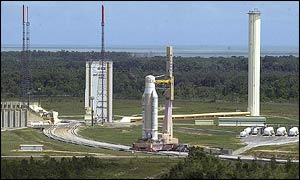 The latest Ariane 5 is the biggest yet A launcher with a 10-tonne capacity developed by European Space Agency member states will make its maiden flight later this month. Arianespace, the company that operates Europe's rockets, hopes the new version of its heavy-lift vehicle will yield a commercial advantage in what has become a shrinking satellite market. The launcher is the first developed in Europe with the ability to deliver such large payloads into geostationary orbits. Europe's spaceport in Kourou in French Guiana is the venue for the Ariane 5 launch on 28 November. It costs only slightly more to produce than its slightly smaller predecessor. Flexible rocket The latest incarnation of Ariane 5 will offer the flexibility to carry two or even three smaller satellites. This is likely to cut costs to companies wanting to place satellites in orbit, as they can share a single launch with another customer. The main competition for Ariane 5 is found in the US, where Lockheed Martin's new Atlas 5 launcher will be capable of putting payloads in excess of eight tonnes into orbit. Boeing is also about to launch a new rocket - the Delta IV - and competition within the industry is fierce. The main customers for the US launchers are the US military, whereas Arianespace relies almost entirely on commercial customers. Expected growth Industry analysts Euroconsult say that while the overall market for satellite launches is likely to contract in the short term, prediction models suggest a recovery in the last half of this decade as satellites are renewed. Analyst Rachel Villain told BBC News Online that an expected increase in demand for broadband internet services could translate to increased demand for satellite launches, and there were signs that the European military are now becoming more interested in satellite technology. She said: "Our projections suggest that the decline may continue into 2003, 2004 and even 2005, but that there may be growth from the middle of the decade onwards. "I think that new applications and technologies will emerge in that period." | | See also:  21 Oct 98 | Science/Nature 27 Feb 99 | Science/Nature 29 Aug 01 | Science/Nature 24 Jan 02 | Media reports 28 Feb 02 | Science/Nature Internet links: The BBC is not responsible for the content of external internet sites Top Science/Nature stories now: Links to more Science/Nature stories are at the foot of the page. | ||||||||||||||||||||||||||||||||||||||||||||||||||||||||||||||||||||||||||||||||||||||||||||||||||||||||||||||||||||||||||||||||||||
| |
|  E-mail this story to a friend E-mail this story to a friend |
| |
| Links to more Science/Nature stories |
| | | ||
 | ||||
 | | Back to top
| ||
| ---------------------------------------------------------------------------------- To BBC Sport>> | To BBC Weather>> | To BBC World Service>> ---------------------------------------------------------------------------------- © MMIII | News Sources | Privacy |



