|
 |
 | | | | | | |||||||||||||||||||||||||||||||||||||||||||||||||||||||||||||||||||||||||||||||||||||||||||||||||||||||||||||||||||||||||||||||||||||||||||||||||||||
| | | You are in: Science/Nature | |||||||||||||||||||||||||||||||||||||||||||||||||||||||||||||||||||||||||||||||||||||||||||||||||||||||||||||||||||||||||||||||||||||||||||||||||||||||
|
| | Friday, 1 November, 2002, 11:53 GMT UN peace plan to save planet 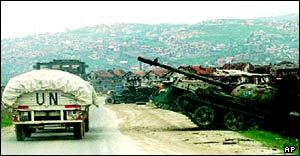 Environmental stress and war are linked, say UN
The project will start in south-eastern Europe and central Asia, but may be extended to other regions later. The UN says the cost of the project is "nothing" by comparison with military spending. The project is called the SEE/CA Initiative: Enhancing Environment and Security in South-Eastern Europe and Central Asia. Details were given to delegates at the Global Mountain Summit here. Incentives for violence It is the brainchild of the UN Environment Programme (Unep), working with the Organisation for Security and Cooperation in Europe (OSCE). Other partners are the UN Economic Commission for Europe, the UN Development Programme, the Regional Environmental Centre for Central Asia, and the International Institute for Sustainable Development. Frits Schlingemann is Unep's Europe representative. He told BBC News Online: "OSCE is being very positive, a real partner. "And ideally the initiative should involve Nato as well - I think, as it builds up, Nato will become part of it." Unep says the pilot regions "are in the midst of tectonic political and economic shifts, with substantial environmental and social consequences. "Actions that reduce environmental stress, guarantee access to vital resources and remove economic incentives for violence present opportunities for building a more sustainable peace." Alien invaders It believes there is the potential for local and even international security to be threatened in both regions. Possible triggers include "rapid population growth, economic vulnerability, inequitable distribution of resources, and ineffective, repressive or corrupt governments".
"Internal economic fragility, criminality and ethnic tensions place great pressure on newly democratic transition states. Ensuring economic development will intensify pressure on natural resources." Unep has listed some of the main environmental threats it believes must be tackled. They include the introduction of alien plants and animals as people cross borders more often, and increasing water scarcity. Growing grievances It says: "Poor water quality as a consequence of pollution and lack of infrastructure is among the major causes of infant mortality in the two regions." It is also worried about old and obsolete factories and power plants. It says contaminated land, soil erosion and bad farming and irrigation methods are creating food insecurity, while severe over-exploitation of forests in Armenia, Georgia and central Asia is triggering avalanches and worsening water quality. Other problems include over-fishing in the North Sea, Baltic, Mediterranean, Black Sea, Caspian and the Sea of Azov. The report also warns of the potential for environmental and ethnic grievances "to fuel political insurgencies". It says Unep will need to "translate its sectoral responsibilities into a broader capacity to act as a think-tank for the UN on environmental matters". Visible links Mr Schlingemann told BBC News Online: "That really means going back to the original vision for Unep. It's meant to be a catalyst, persuading other people to act.
"I know our list of the potential threats doesn't include some pretty contentious ones, like nuclear power. But it's not exhaustive, and the stakeholders will expand it. "This project will succeed by making the link between environment and conflict more visible, and it will work elsewhere. "I think it could even work in the Middle East, on the West Bank - and we're absorbing the lessons of what's been done there already." | |
See also:  31 Oct 02 | Science/Nature 09 Oct 02 | Science/Nature 22 Mar 02 | In Depth Internet links: The BBC is not responsible for the content of external internet sites Top Science/Nature stories now: Links to more Science/Nature stories are at the foot of the page. | |||||||||||||||||||||||||||||||||||||||||||||||||||||||||||||||||||||||||||||||||||||||||||||||||||||||||||||||||||||||||||||||||||||||||||||||||||||
| |
|  E-mail this story to a friend E-mail this story to a friend |
| |
| Links to more Science/Nature stories |
| | | ||
 | ||||
 | | Back to top
| ||
| ---------------------------------------------------------------------------------- To BBC Sport>> | To BBC Weather>> | To BBC World Service>> ---------------------------------------------------------------------------------- © MMIII | News Sources | Privacy |