|
 |
 | | | | | | ||||||||||||||||||||||||||||||||||||||||||||||||||||||||||||||||||||||||||||||||||||||||||||||||||||||||||||||||||||||||||||||||||||||
| | | You are in: Science/Nature | ||||||||||||||||||||||||||||||||||||||||||||||||||||||||||||||||||||||||||||||||||||||||||||||||||||||||||||||||||||||||||||||||||||||||
|
| | Friday, 25 October, 2002, 16:02 GMT 17:02 UK Uncorking the chemistry of wine 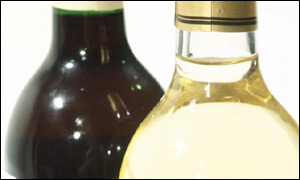 Colour, fragrance and flavour help to predict the quality It is not easy to predict wine quality at the grape stage and, by the time the juice has fermented, it is usually too late to correct imbalance. The results are not known until the wine hits the shelves or when a wine critic rates it. So what makes a great wine? Many variables may separate a mediocre wine from a good wine, but now a Californian winemaker and businessman claims to have a mathematical formula for great wine. "We measure the colour, fragrance and flavour of the wine and try to predict wine quality two or three years from now," Leo McCloskey told the BBC World Service. Flavour flags A former winemaker himself, McCloskey now runs a consulting firm called Enologix. Here he has noted key chemical characteristics for a range of wines and compared them with what experts make of the final product.
"We've solved the math of flavour for wine," he told the Science In Action programme. "We have taken an approach to cataloguing every important wine of the world." More than 50,000 wines have been broken down into their chemical compounds. In the right proportions tannins and phenols become luxury wines. However, McCloskey does not map out the wines' full chemistry; he just notes what he calls the "flags" that set fine wines apart. "Wine may be comprised of 400-500 compounds, but we were just interested in the major colour and flavour fragrance flags that the industry was seeing," he said. "Ten or 20 flags is enough to build a mathematical model called an algorithm." Critic's choice Traditionally wine makers have determined quality based on sensory descriptions. Since wine critics have strong influences on the American wine market, this wine connoisseur says his digital wine tools can put the critics' wine scores in the hands of the grape grower.
"We line this all up for the wine maker and help them determine what the critics' score might be." With this system, McCloskey believes that he can predict what a wine will be like before it is bottled, giving wine makers the opportunity to modify the flavour if necessary. Sour grapes However, Roger Boulton, a professor at the Department of Viticulture and Enology at University of California Davis, believes that the system is too reliant on subjective taste for success. "We could serve the same wine to six people around the table and I will guarantee that six people will have different responses," he asserted. "The chemistry is the same, so it can't be the chemistry. What might be considered bitter and pleasant in one part of the world might be considered unacceptable and too bitter in another." Sceptical of the accuracy of the research, Professor Boulton went on to warn that "you need a number of evaluations", as, in winemaking, you should never "trust a single judgement". | | See also:  16 Oct 02 | Europe 03 Oct 02 | Business 06 Sep 02 | Business 03 Sep 02 | Health 14 Aug 02 | England Internet links: The BBC is not responsible for the content of external internet sites Top Science/Nature stories now: Links to more Science/Nature stories are at the foot of the page. | ||||||||||||||||||||||||||||||||||||||||||||||||||||||||||||||||||||||||||||||||||||||||||||||||||||||||||||||||||||||||||||||||||||||
| |
|  E-mail this story to a friend E-mail this story to a friend |
| |
| Links to more Science/Nature stories |
| | | ||
 | ||||
 | | Back to top
| ||
| ---------------------------------------------------------------------------------- To BBC Sport>> | To BBC Weather>> | To BBC World Service>> ---------------------------------------------------------------------------------- © MMIII | News Sources | Privacy |