|
 |
 | | | | | | |||||||||||||||||||||||||||||||||||||||||||||||||||||||||||||||||||||||||||||||||||||||||||||||||||||||||||||||||||||||||||||||||||||||||||||||||||||||||||||||||||||||||||||||||||||||||||||
| | | You are in: Middle East | |||||||||||||||||||||||||||||||||||||||||||||||||||||||||||||||||||||||||||||||||||||||||||||||||||||||||||||||||||||||||||||||||||||||||||||||||||||||||||||||||||||||||||||||||||||||||||||||
|
| | Wednesday, 18 December, 2002, 09:51 GMT Analysis: US 'problems' with dossier 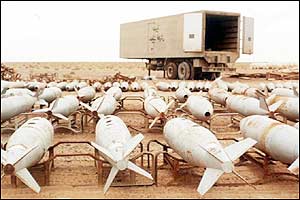 The US wants full details of Iraq's material
Powell's comment was understated. So was astronaut Jim Lovell's when an oxygen tank blew up mid-way to the moon in 1970. Both comments were serious. The "problems" over the declaration could relate to material unaccounted for when the weapons inspectors left Iraq in 1998. Explaining what happened to it was the first test laid down by the US and Britain for the truthfulness of the Iraqi inventory. When Iraq handed over the declaration on 7 December, in fact, it said worryingly that there was nothing new to say about this material. 'Ominous statement' It was made up of 300 tonnes of chemical warfare agents, including 1.5 tonnes of VX, 3000 tonnes of chemical precursors, growth medium for 20,000 litres of biological warfare agents and tens of thousands of shells and bombs for use in chemical and biological war.
Iraq said at the time that all this had been destroyed but the UN was not convinced. It could be that the Iraqi declaration does not convince Washington. Mr Powell's preliminary assessment sounds ominous. If it means that Iraq has failed to account for the missing material, then it could be too late for Baghdad to make amends. US ready 'to pounce' The resolution said that Iraq was being given a "final opportunity" to bring itself into compliance. The White House has already said that it is Iraq's "last chance". The Washington hawks might need no further bait on which to pounce. If the Powell statement is followed up by an eventual decision by the US or the UN Security Council as a whole to conclude that Iraq has not complied with resolution 1441, it could turn out to have been a signal for war. Key date But a lot has to happen first. To start with, the head of the inspections organisation (Unmovic), Dr Hans Blix, is to give his own preliminary view to the Security Council in New York on Thursday 19 December. The US has indicated that it might be ready to give its initial position soon afterwards.
A key date is 27 January. That is the deadline for Unmovic and the International Atomic Energy Agency (IAEA) to give a more considered view on Iraqi compliance. Theirs will not determine the American (or the British) attitude. But it will be important and unless they say that Iraq is not co-operating, other members of the Security Council would be unlikely to authorise military action against Iraq. 'Grey area' Before there can be any military action either by the US or the Security Council as a whole, Iraq has to be in "material breach" of the resolution. The resolution says that "false statements or omissions in the declaration...and failure by Iraq at any time to comply with and cooperate fully," would amount to such a breach. Just how strong the word "and" is in the wording above remains to be seen. It was put there instead of "or" at the insistence of France and Russia to lessen the chances of a mistake in the declaration alone being used as a reason for attack. But the US might conclude that a serious falsehood or omission was in itself enough for non-cooperation to be evident and for a breach to be committed. It is, to say the least, a grey area and surprising given the weeks the resolution took to negotiate. Many 'ifs' If Iraq is reported to the Council for failing in some way, a meeting of the Council has to be convened immediately. But the resolution does not commit a meeting to do anything. The wording does remind Iraq that it has been warned before of "serious consequences" if it does not comply with UN resolutions. Everyone knows, of course, what "serious consequences" could mean. If the US, supported perhaps by Britain, decided to take unilateral action, it would probably wait until the Council has been unable to reach agreement first. All this would probably take some weeks. There are many "ifs" in this story. | |
See also:  17 Dec 02 | Middle East 17 Dec 02 | Politics 16 Dec 02 | Politics 16 Dec 02 | Middle East 11 Dec 02 | Middle East 09 Dec 02 | Middle East 04 Dec 02 | Middle East 08 Dec 02 | Middle East 25 Sep 02 | Conflict with Iraq Internet links: The BBC is not responsible for the content of external internet sites Top Middle East stories now: Links to more Middle East stories are at the foot of the page. | |||||||||||||||||||||||||||||||||||||||||||||||||||||||||||||||||||||||||||||||||||||||||||||||||||||||||||||||||||||||||||||||||||||||||||||||||||||||||||||||||||||||||||||||||||||||||||||
| |
|  E-mail this story to a friend E-mail this story to a friend |
| |
| Links to more Middle East stories |
| | | ||
 | ||||
 | | Back to top
| ||
| ---------------------------------------------------------------------------------- To BBC Sport>> | To BBC Weather>> | To BBC World Service>> ---------------------------------------------------------------------------------- © MMIII | News Sources | Privacy |