|
 |
 | | | | | | |||||||||||||||||||||||||||||||||||||||||||||||||||||||||||||||||||||||||||||||||||||||||||||||||||||||||||||||||||||||||||||||||||||||||||||||||||||||||||||||||||||||||||
| | | You are in: Europe | |||||||||||||||||||||||||||||||||||||||||||||||||||||||||||||||||||||||||||||||||||||||||||||||||||||||||||||||||||||||||||||||||||||||||||||||||||||||||||||||||||||||||||||
|
| | Monday, 10 February, 2003, 16:56 GMT Analysis: Balkans election stagnation  Turnout in Montenegro was again below 50%
Montenegro's second attempt within two months to elect a president failed on Sunday when the turnout in the nationwide vote failed to reach the required 50%.
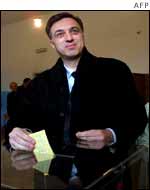
The speaker of the Montenegrin parliament, Filip Vujanovic, will now carry on as acting president - just like his opposite number in Serbia, Natasa Micic - until a head of state is elected. But what is behind the failure in each of these cases to elect a president and who, if anybody, is benefiting from it? Mr Vujanovic, the candidate of Montenegro's pro-independence governing coalition, won an overwhelming majority of the votes - more than 80% - in Sunday's presidential election, just as he had done during his first attempt seven weeks earlier. But once again he failed to get elected because, according to unofficial figures, the turnout was around three percentage points below the required 50% of the electorate.
Heavy snow meant that around one in 14 of polling stations could not open. But the most important factor behind the failure of the ballot was the decision of the main anti-independence opposition bloc - known as Together for Change - not to have its own candidate. Most of its supporters boycotted the polls. Kostunica failure The situation is not unlike that in Serbia - Montenegro's partner in what was until last week federal Yugoslavia and has now become the much more loosely-knit union of Serbia and Montenegro.
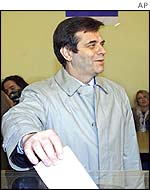
And on the last occasion, in December, that was mainly because his main political rival, Serbian Prime Minister Zoran Djindjic, held back from running his own candidate. For Mr Kostunica the repeated failure to get elected was a slap in the face - both from Prime Minister Djindjic and from the Serbian electorate. He had enjoyed overwhelming popularity after he defeated the authoritarian post-communist leader, Slobodan Milosevic, in the Yugoslav presidential elections nearly two and a half years ago. He is still soldiering on in a caretaker capacity as the president of the now defunct Yugoslavia - before the parliament of the newly formed union of Serbia and Montenegro convenes to select a head of state. Once Mr Kostunica steps down, he will lose his power base within the federal institutions, including sections of the army high command. Constitution rethink He will have no important office in any of the institutions of the state.
For that reason, Mr Djindjic is keen to postpone any further attempts at electing a Serbian president until the republic's constitution has been changed to take into account the departure of Mr Milosevic's authoritarian regime and the end of the Yugoslav federation. A new constitution will take at least six months - and possibly much longer - to draft. In the meantime, Mr Djindjic is happy to have a political ally, such as Ms Micic, continuing the fill the role of acting president. The longer the vacuum at the presidency, the longer presidential and parliamentary elections are postponed, the more Mr Djindjic believes he can consolidate his own position. Union presidency By contrast, Montenegro's Prime Minister Milo Djukanovic is in more of a hurry.
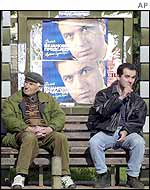
It now looks likely that Montenegro's election law will be amended to abolish the turnout requirement. That will make it possible for a fresh presidential election to be held in the next two to three months. Judging by the latest results, Mr Vujanovic will then, all likelihood, be elected president. However, the first of the presidential vacancies to be filled is almost certain to be at the head of the union of Serbia and Montenegro. It is expected that the newly-formed union's parliament will meet later this month, and MPs will then pick one of Mr Djukanovic's colleagues, Svetozar Marovic as president. The choice of the new Serbian-Montenegrin union's president will be based on political wheeling and dealing. Many Serbians and Montenegrins feel disillusioned with the way politicians operate - perhaps more so in Serbia where the fall of Mr Milosevic raised expectations of a different kind of fresh start. Now, for many people disappointment with politics is turning into electoral apathy. | | See also:  09 Feb 03 | Europe 23 Dec 02 | Europe 07 Dec 02 | Europe 31 May 02 | Europe 14 Mar 02 | Europe 15 Mar 02 | Europe 14 Mar 02 | Europe 28 Dec 00 | Europe Internet links: The BBC is not responsible for the content of external internet sites Top Europe stories now: Links to more Europe stories are at the foot of the page. | |||||||||||||||||||||||||||||||||||||||||||||||||||||||||||||||||||||||||||||||||||||||||||||||||||||||||||||||||||||||||||||||||||||||||||||||||||||||||||||||||||||||||||
 | |
|  E-mail this story to a friend E-mail this story to a friend |
| |
| Links to more Europe stories |
| | | ||
 | ||||
 | | Back to top
| ||
| ---------------------------------------------------------------------------------- To BBC Sport>> | To BBC Weather>> | To BBC World Service>> ---------------------------------------------------------------------------------- © MMIII | News Sources | Privacy |






 For many people disappointment with politics is turning into electoral apathy