|
 |
 | | | | | | |||||||||||||||||||||||||||||||||||||||||||||||||||||||||||||||||||||||||||||||||||||||||||||||||||||||||||||||||||||||||||||||||||||||||||||||||||||||||||||||||||||||||
| | | You are in: Europe | |||||||||||||||||||||||||||||||||||||||||||||||||||||||||||||||||||||||||||||||||||||||||||||||||||||||||||||||||||||||||||||||||||||||||||||||||||||||||||||||||||||||||||
|
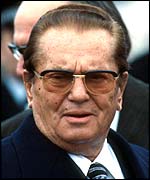
| | Thursday, 14 March, 2002, 22:40 GMT Yugoslavia consigned to history  For many Yugoslavia has become inextricably linked with one leader
The agreement signed on Thursday in Belgrade between Serbia and Montenegro signals the end of Yugoslavia, more than 80 years after the creation of the Kingdom of Serbs, Croats and Slovenes. Yugoslavia was born in the wake of World War One, suffered occupation and dismemberment during World War Two, flowered again as a Socialist republic but ultimately broke up in a series of calamitous wars in the 1990s. Its life was marked by struggles between fractious republics and the central government, between local nationalisms and the dream of a country in which such identities were less important. Royal dictatorship Yugoslavia owed its foundation to the Council of Versailles at the end of World War One. Serbia had fought on the same side as the Western Powers - and in return they recognised the Kingdom of Serbs, Croats and Slovenes with greatly extended borders, stretching from Austria in the north to Greece in the south.
In January 1929, Alexander I disbanded parliament and changed the name to Yugoslavia to try to erase the old national identities. But it was never going to be as easy as that - Alexander was assassinated five years later by a Croatian nationalist. Peace and prosperity During World War Two the country was divided, parts were annexed by neighbouring powers under fascist governments, Croatia declared independence and the capital Belgrade was occupied by Germany. But after dogged resistance, the communist partisan movement led by Marshall Tito expelled the invaders. He declared the country a socialist republic and banned the monarchy. Again, a strong central government had to wrestle with local national aspirations.
Serbia was by far the largest, and to reduce its influence two of its provinces - Kosovo in the south and Vojvodina in the north - were given autonomy. After the war, socialist Yugoslavia broke with the Soviet Union and enjoyed good relations with the West. It thrived on its non-aligned status - the economy boomed, standards of living rose and the country enjoyed four decades of peace. Nationalism lost its appeal and demands for independence were kept in check by the secret police. Return of Nationalism In 1980 the man who had done most to create modern Yugoslavia, Tito, died. Many assumed that the country would die with him. They were to be proved wrong, at least for a decade. By the end of the 1980s, Yugoslavia was suffering the consequences of its long economic boom. Mired in debt, the country began to run out of money. International banks imposed strict economic policies, companies collapsed, unemployment rose - and nationalism returned.
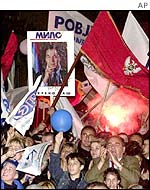
By 1991, the combination of financial crisis and nationalist protests became too much. One by one the republics broke away: Slovenia, Croatia, Bosnia and then Macedonia all seceded from Yugoslavia. But the federation continued to exist, though by now it was composed of just Serbia and Montenegro - and even Montenegro wanted to break away. In 1999, the independence campaign by ethnic Albanian nationalists in Kosovo turned into open warfare, provoking a wave of government repression across the province. The NATO bombing campaign of that year ended with Kosovo as an international protectorate, though formally still a part of Yugoslavia. Final chapter In 2000, Milosevic was deposed in a popular uprising after clumsily fixing the presidential election. At that point, Western policy towards Yugoslavia changed completely. Albanian nationalists operating in Kosovo and southern Serbia were reined in, and Montenegro was pressed to remain part of Yugoslavia and not declare independence. If Montenegro had broken away, the federal republic of Yugoslavia would have disappeared and the whole question of Kosovo's future status would have been re-opened at a very difficult time. But Montenegro pushed for greater autonomy, and today in Belgrade the European Union finally oversaw the death throes of Yugoslavia. | | See also:  14 Mar 02 | Europe 28 Dec 00 | Europe 15 Mar 02 | Europe 15 Mar 02 | Europe 15 Mar 02 | Europe Internet links: The BBC is not responsible for the content of external internet sites Top Europe stories now: Links to more Europe stories are at the foot of the page. | |||||||||||||||||||||||||||||||||||||||||||||||||||||||||||||||||||||||||||||||||||||||||||||||||||||||||||||||||||||||||||||||||||||||||||||||||||||||||||||||||||||||||
 | |
|  E-mail this story to a friend E-mail this story to a friend |
| |
| Links to more Europe stories |
| | | ||
 | ||||
 | | Back to top
| ||
| ---------------------------------------------------------------------------------- To BBC Sport>> | To BBC Weather>> | To BBC World Service>> ---------------------------------------------------------------------------------- © MMIII | News Sources | Privacy |