|
 |
 | | | | | | ||||||||||||||||||||||||||||||||||||||||||||||||||||||||||||||||||||||||||||||||||||||||||||||||||||||||||||||||||||||||||||||||||||||||||||||||||||||||||||||||||||||||||||||||||
| | | You are in: Europe | ||||||||||||||||||||||||||||||||||||||||||||||||||||||||||||||||||||||||||||||||||||||||||||||||||||||||||||||||||||||||||||||||||||||||||||||||||||||||||||||||||||||||||||||||||||
|
| | Friday, 6 December, 2002, 10:46 GMT Big brains ponder EU architecture  A man stands behind Giscard to move his chair
Half-way through this week's plenary session of the Convention on the Future of Europe, I noticed that two men appeared to be employed to sit, in turns, on the stage just behind the Convention President, Valery Giscard d'Estaing.
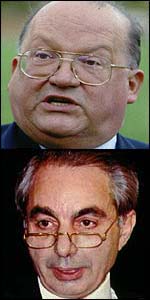
He does that quite often, and comes back each time with his huge ET-like dome of a head bulging with even bigger thoughts. The convention is a place for profound thinking. Nine months into its work, it is deep into the minutiae of constitution-writing. And make no mistake - the European Union's future is in the hands of some very clever men and women.
Perhaps some day the cliffs of the Rhine will be carved with Mount Rushmore-like statues of the three key figures - the beefy former Belgian Prime Minister, Jean-Luc Dehaene, the silver-haired, arm-waving Italian, Giuliano Amato, and "ET". This week, they have been discussing "simplification of instruments and procedures". Convention Vice-President Amato pointed out that EU law-making was so complex that people did not understand it. He proposed simplifying things, having only laws and framework laws rather than regulations and directives, as at present, because "what in Brussels is a regulation would be a law anywhere else". The discussion, it should be said - although it is aimed at making the EU more understandable to the common man - itself hovers in a legalistic stratosphere, which would make the common man gawp with admiration, or incomprehension. "Atypical acts should not be used if typical acts exist," someone was saying, and I noticed that some of the convention grandees - many of the members are past or serving foreign ministers, MPs or PMs - were starting to get up and walk about for a while, apparently to ward off deep-vein thrombosis, or perhaps some even more catastrophic affliction to the brain. Brussels interference Yet the arcane debate here this week is about something very important. It is about whether EU laws should be binding or merely recommendations to member states (laws or frameworks) - in other words, it is about how interfering Brussels is allowed to be. That is a matter close to the heart of many Europeans.
The debate is also about the European Parliament's role in making EU laws. The emerging consensus was that Parliament, as an elected body, should have an equal say - with member states - in all laws, not just some, as at present. As for the method by which member states approve EU laws, that too is under scrutiny, with more and more convention members speaking out in favour of abolishing the right of veto in all spheres.
The right of veto, he said, already frequently led to paralysis; imagine what it would be like in an EU of 25 nations! Another speaker backed him up, saying - if my hearing did not deceive me - that it took the EU 20 years to formulate a definition of jam because of the need for unanimity. Many EU governments go along with the need for more majority voting. But Britain will draw the line at losing the veto over matters such as taxation, which it regards as a national prerogative. And France's Foreign Minister, Dominique de Villepin, jumped up on Wednesday to defend the right of veto over the Common Agricultural Policy. The argument will loom over the convention's discussions over the next few months. 'Closer union' Mr Prodi was scathing about previous attempts to overhaul the EU's workings. Two intergovernmental conferences, he said (meaning the Treaties of Amsterdam and Nice), had failed; change could no longer be put off, and that required willingness to change on the part of everyone. For the moment, the actors here are pulling in many directions. Some want an EU president; some want more power to the commission; some more power to the regions; all want to preserve the things most dear to them. But Mr Prodi was adamant about where it was all leading in the end. The "ever closer union" proclaimed in the EU's treaties, he said, was "the alpha and omega of our approach". | |
See also:  05 Dec 02 | Europe 18 Feb 03 | Politics 29 Oct 02 | Europe 29 Oct 02 | Archive 29 Oct 02 | Europe Top Europe stories now: Links to more Europe stories are at the foot of the page. | ||||||||||||||||||||||||||||||||||||||||||||||||||||||||||||||||||||||||||||||||||||||||||||||||||||||||||||||||||||||||||||||||||||||||||||||||||||||||||||||||||||||||||||||||||
 | |
|  E-mail this story to a friend E-mail this story to a friend |
| |
| Links to more Europe stories |
| | | ||
 | ||||
 | | Back to top
| ||
| ---------------------------------------------------------------------------------- To BBC Sport>> | To BBC Weather>> | To BBC World Service>> ---------------------------------------------------------------------------------- © MMIII | News Sources | Privacy |






 If my hearing did not deceive me, a speaker said that it took the EU 20 years to formulate a definition of jam because of the need for unanimity