|
 |
 | | | | | | |||||||||||||||||||||||||||||||||||||||||||||||||||||||||||||||||||||||||||||||||||||||||||||||||||||||||||||||||||||||||||||||||||||||||||||||||||||||||||||||||||||||||||||||||||||||||||||||||||||||||||
| | | You are in: Europe | |||||||||||||||||||||||||||||||||||||||||||||||||||||||||||||||||||||||||||||||||||||||||||||||||||||||||||||||||||||||||||||||||||||||||||||||||||||||||||||||||||||||||||||||||||||||||||||||||||||||||||||
|
| | Monday, 30 September, 2002, 11:57 GMT 12:57 UK Kostunica takes lead in Serbian poll 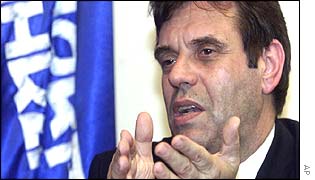 Vojislav Kostunica says he has beaten "extremists" Yugoslav President Vojislav Kostunica is in a strong position to become president of Serbia after coming top in a first round of voting on Sunday.
Correspondents say that voters who backed the third-placed ultra-nationalist Vojislav Seselj in the first round are most likely to vote for Mr Kostunica in the run-off on 13 October. Early on Monday, Mr Kostunica branded both Mr Labus and Mr Seselj as extremists. Half-time He described Mr Labus's programme as an attempt to graft demands from international institutions on to Serbia "without any consideration for the country's social situation and the absence of a democratic and legal framework".
"The match isn't over yet. We are at half-time now, and the other candidate is less than 100,000 votes ahead," he said. Mr Kostunica has vowed to "confront" the Djindjic government if he wins the election, arguing that the government's reforms are bleeding a nation battered by war and sanctions. He and Mr Djindjic were part of the same coalition that toppled Yugoslav President Slobodan Milosevic in 2000, but the two men are now engaged in a bitter power struggle. Mr Kostunica's job as Yugoslav president will disappear later this year when the Yugoslav federation becomes a loose union known as Serbia and Montenegro. Nationalism He has opted to run for the Serbian presidency, rather than the presidency of the new union, whose long-term survival prospects are unclear.
Serbia's Deputy Prime Minister, Nebojsa Covic, a Kostunica supporter, said this showed that Serbia had not yet moved fully beyond the extreme nationalism of the Milosevic era. "The encouraging thing is that two pro-democracy candidates are entering the run-off," he said. "The discouraging thing is that some of the votes that helped oust Milosevic have now gone to Seselj." Mr Kostunica flirted with hard-core nationalists during the campaign, hinting that Serb lands in Bosnia would one day be re-united with the homeland. Low turnout Observers were disappointed by the low turnout of 55%.
If that happens, the whole election will be invalid, plunging Serbia into a constitutional crisis, the BBC's Nick Thorpe reports from Belgrade. Both leading candidates appealed to Serbians to come out in force in a fortnight's time. Whoever wins will replace Milan Milutinovic, the last ally of Mr Milosevic still in power, who is indicted alongside him for alleged war crimes committed during the Kosovo war. | |
See also:  30 Sep 02 | Europe 29 Sep 02 | Business 30 Sep 02 | Europe 27 Sep 02 | Media reports 09 Aug 02 | Europe 15 Mar 02 | Europe 25 Sep 02 | Country profiles Internet links: The BBC is not responsible for the content of external internet sites Top Europe stories now: Links to more Europe stories are at the foot of the page. | |||||||||||||||||||||||||||||||||||||||||||||||||||||||||||||||||||||||||||||||||||||||||||||||||||||||||||||||||||||||||||||||||||||||||||||||||||||||||||||||||||||||||||||||||||||||||||||||||||||||||||
| |
|  E-mail this story to a friend E-mail this story to a friend |
| |
| Links to more Europe stories |
| | | ||
 | ||||
 | | Back to top
| ||
| ---------------------------------------------------------------------------------- To BBC Sport>> | To BBC Weather>> | To BBC World Service>> ---------------------------------------------------------------------------------- © MMIII | News Sources | Privacy |