|
 |
 | | | | | | ||||||||||||||||||||||||||||||||||||||||||||||||||||||||||||||||||||||||||||||||||||||||||||||||||||||||||||||||||||||||||||||||||||||||||||||||||||||||||||||||||||||||||||||||||||||||||
| | | You are in: Europe | ||||||||||||||||||||||||||||||||||||||||||||||||||||||||||||||||||||||||||||||||||||||||||||||||||||||||||||||||||||||||||||||||||||||||||||||||||||||||||||||||||||||||||||||||||||||||||||
|
| | Saturday, 21 September, 2002, 10:58 GMT 11:58 UK Battle for Germany's heartland 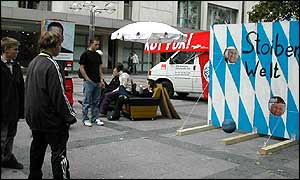 Germans are tired of their politicians' games
In the centre of Dortmund, young members of Germany's ruling Social Democrat Party invite passers-by to take part in a series of games.
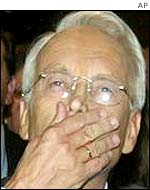
The other involves knocking a tin can carrying his face off a block with a plastic ball. Mr Stoiber may well have a few enemies here in Dortmund, one of the former industrial towns that make up the Ruhrgebiet in North Rhine Westphalia, the heartland of the SPD. Economic crisis It is Germany's largest state, with 18 million people, or a fifth of the population.
It also has some of the highest unemployment in western Germany. For the last 40 years, the Ruhrgebiet has suffered a major economic crisis sparked by the decline of its once core industries such as coal, steel and iron. Mr Schroeder came to power on a promise to change all that. If he could not bring German unemployment down to 3.5 million, he did not deserve to be re-elected, he declared. September's figures put unemployment above the crucial four million mark. "The SPD has not failed," snaps the head of the Dortmund branch of the SPD, Guenther Wegmann. "There have been all sorts of problems in the world economy that have had an impact on Germany and which are beyond our control. "SPD supporters here understand that, and they don't blame us. Our biggest worry is complacency among our voters, that they won't come out on Sunday. "But they won't to go to the opposition," he adds. Disappointment Mr Wegmann seems to be right, up to a point.
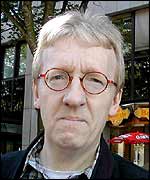
Edmund Stoiber's election campaign, which has been based on his economic success in the state of Bavaria - of which he is prime minister - appears to have made little impact here. "Schroeder has not lived up to his promises, but it's not really his fault," says Peter Preusser, an IT specialist in Dortmund. "Stoiber certainly won't do any better with the economy, I'm convinced of that - it's too based on Bavaria. The SPD will have my vote on Sunday." But if Mr Wegmann thinks voters here are not disappointed by the results of four years of SPD government, he is mistaken. "Traditionally I am an SPD voter, that's always been my political home," says former bank worker Karl Heinz. "But I'm not going to vote on Sunday. "In 1998 I truly believed the SPD would change things. But here I am four years on, I don't have a job, and I don't have any faith in either party," he says. "We saw 16 years of disastrous conservative rule, so I'm certainly not going to go in that direction." Unemployment crisis Unemployment in Dortmund has fallen marginally under SPD rule, from 15.6% in 1998 to just over 13% in 2002, and gradually more jobs are being created in the service sectors.
But it does not appear to have been enough to contain the disappointment. Mr Schroeder does have a plan for tackling unemployment, which will place much more pressure on the jobless to accept work or risk losing their benefits. The unemployed will also be hired out to firms for a low rate. Mr Stoiber does not disagree, insisting he could do the job better. "Gerhard Schroeder is only interested in one job vacancy. And that's his own as chancellor," Mr Stoiber likes to say. Mr Schroeder has worked hard to try to push the issue of unemployment to the back of people's minds in the run-up to Sunday's vote, concentrating on formulating his opposition to the prospect of US-led military action against Iraq. But it was the issue that most people on the streets of Dortmund brought up as the one that they truly cared about. "It is the main thing for me and for my friends - it's something everyone worries about," says Mavian, an engineering student. "I haven't made up my mind yet who I think is best equipped to sort this out." Frequent stop Hoping to persuade people like Mavian, as well as the traditional SPD supporters who might not bother going to the polls, top SPD figures have made North Rhine Westphalia a frequent stop on the campaign trail. Mr Schroeder scheduled eight campaign appearances in North Rhine Westphalia in the three weeks before the election, ending up in Dortmund for his penultimate rally. Other prominent members of the party have also put in regular appearances here. But it remains to be seen whether being lavished with the attention of SPD bigwigs is enough to push people to the polls, and help the chancellor hold onto his job. | |
See also:  21 Sep 02 | Europe 12 Sep 02 | Business 20 Sep 02 | Europe 19 Sep 02 | Europe 13 Sep 02 | Europe 20 Sep 02 | Media reports 20 Sep 02 | Business 08 Sep 02 | Europe 20 Aug 02 | Country profiles Internet links: The BBC is not responsible for the content of external internet sites Top Europe stories now: Links to more Europe stories are at the foot of the page. | ||||||||||||||||||||||||||||||||||||||||||||||||||||||||||||||||||||||||||||||||||||||||||||||||||||||||||||||||||||||||||||||||||||||||||||||||||||||||||||||||||||||||||||||||||||||||||
| |
|  E-mail this story to a friend E-mail this story to a friend |
| |
| Links to more Europe stories |
| | | ||
 | ||||
 | | Back to top
| ||
| ---------------------------------------------------------------------------------- To BBC Sport>> | To BBC Weather>> | To BBC World Service>> ---------------------------------------------------------------------------------- © MMIII | News Sources | Privacy |