|
 |
 | | | | | | |||||||||||||||||||||||||||||||||||||||||||||||||||||||||||||||||||||||||||||||||||||||||||||||||||||||||||||||||||||||||||||||||||||||||||||||||||||||||||||||||||||||||||||||||||||
| | | You are in: Europe | |||||||||||||||||||||||||||||||||||||||||||||||||||||||||||||||||||||||||||||||||||||||||||||||||||||||||||||||||||||||||||||||||||||||||||||||||||||||||||||||||||||||||||||||||||||||
|
| | Tuesday, 24 September, 2002, 14:07 GMT 15:07 UK Can German-US relations recover? 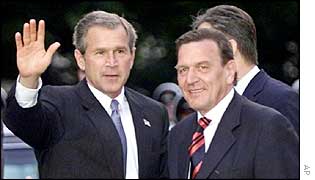 Can they get back to happier times?
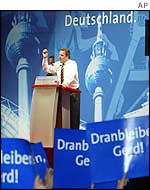
Fresh from his re-election, German Chancellor Gerhard Schroeder flies to London on Tuesday to meet Tony Blair. As he does so, there are voices urging him to begin mending relations with the US. But how much can he do?  The core of the bad feeling lies in two campaign events:
The hurt on the US side is keenly felt. US Republican congressman Peter King says the damage will last: "In view of all the United States has done for Germany over the years, I think you'll see a very changed policy towards Schroeder." What can Schroeder offer? At present however, Mr Schroeder may not be able - or even willing - to offer much more in public.
Pollsters are agreed that his anti-war stance was a major factor in winning him the election. It is also a central plank of the policies of his coalition partner, the Greens, whose improved showing saved Mr Schroeder from defeat. No change expected To reverse this stance seems politically unthinkable. Greens' secretary-general Reinhard Buetikofer told the BBC: "I'm quite convinced that the policy... is not going to change after the election. I mean, that was the purpose of all of it - to make clear to the German people which policy these two parties would be standing for."
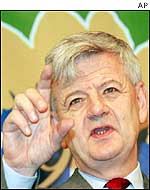
Some commentators say Mr Schroeder could eventually back military action against Iraq if Saddam Hussein fails to co-operate with UN weapons inspectors and there is a UN resolution authorising force. He could also help to relieve the operational pressure on the US and UK military by increasing the German contingent in peacekeeping operations in the Balkans and Afghanistan. The Fischer factor Foreign Minister Joschka Fischer may also play a large part. He is believed to be well regarded in Washington, and has said Germany will never forget the part America played in defeating the Nazis and in helping with German reunification in 1990.
One of the lessons the German political class drew from the liberation in 1945 was that Germany should be embedded in international structures to prevent the country "going it alone" again. This fervent belief in multilateralism is sorely tested by what some see as US unwillingness to work within such structures itself. The iconic American figure of the lonesome cowboy enforcing the law on his own holds little appeal in Germany. | |
Internet links:  The BBC is not responsible for the content of external internet sites Top Europe stories now: Links to more Europe stories are at the foot of the page. | |||||||||||||||||||||||||||||||||||||||||||||||||||||||||||||||||||||||||||||||||||||||||||||||||||||||||||||||||||||||||||||||||||||||||||||||||||||||||||||||||||||||||||||||||||||
| |
|  E-mail this story to a friend E-mail this story to a friend |
| |
| Links to more Europe stories |
| | | ||
 | ||||
 | | Back to top
| ||
| ---------------------------------------------------------------------------------- To BBC Sport>> | To BBC Weather>> | To BBC World Service>> ---------------------------------------------------------------------------------- © MMIII | News Sources | Privacy |