
|
 |
 | | | | | | ||||||||||||||||||||||||||||||||||||||||||||||||||||||||||||||||||||||||||||||||||||||||||||||||||||||||||||||||||||||||||||||||||||||||||||||||||||||||||||||||
| | | You are in: Business | ||||||||||||||||||||||||||||||||||||||||||||||||||||||||||||||||||||||||||||||||||||||||||||||||||||||||||||||||||||||||||||||||||||||||||||||||||||||||||||||||||
|
| | Friday, 24 January, 2003, 17:53 GMT US economy 'can survive war'  War could cost millions of dollars a day
Speaking in a debate at the World Economic Forum in Davos, Donald Evans denied that conflict, which could cost the US $40-50m a day to wage, would unduly affect a superpower economy.
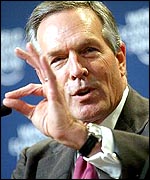
He said he was "upbeat, optimistic" about the future, citing solid productivity and the stimulus package presented by President George W Bush as his grounds for optimism. Spending power Meanwhile, Cisco Systems chief executive John Chambers warned the seminar bad government threatened growth and living standards and around the world. Mr Chambers said that, long-term, both US and global economies were poised for growth as productivity improvements, fostered by technology, improved corporate growth.
"Unlike in the industrial revolution, to benefit you will not have to be in one location to participate," he said. "The standard of living is going to go up, real disposable incomes will go up." The danger to growth was that policymakers "misexecute, and not react, not create", he said, citing the importance of education and infrastructure in maintaining economic performance. Countries lagging in education stood to lose jobs "very quickly, at most within 15 years", as rival nations snapped up trade. He also warned that, in employment terms, smaller firms, traditionally the most innovative, would create the most jobs as the boom progressed. "Small and medium business will be the hiring engines of the next decade," he said. "Large companies will not hire much over the next two to three years in particular." Near term challenge Short-term, he questioned the ability of the US economy to meet targets. "The majority of CEOs I talk to across America are conservative about budgets this year, particularly about employment," he said. But once profits started to recover, company spending would increase two to four months later. Charles Holliday, chairman at DuPont, said that growing corporate thrift had led to "flat water cancellations" of orders. | |
See also:  23 Jan 03 | Business Internet links: The BBC is not responsible for the content of external internet sites Top Business stories now: Links to more Business stories are at the foot of the page. | ||||||||||||||||||||||||||||||||||||||||||||||||||||||||||||||||||||||||||||||||||||||||||||||||||||||||||||||||||||||||||||||||||||||||||||||||||||||||||||||||
 | |
|  E-mail this story to a friend E-mail this story to a friend |
| |
| Links to more Business stories |
| | | ||
 | ||||
 | | Back to top
| ||
| ---------------------------------------------------------------------------------- To BBC Sport>> | To BBC Weather>> | To BBC World Service>> ---------------------------------------------------------------------------------- © MMIII | News Sources | Privacy |






 Small and medium business will be the hiring engines of the next decade


