|
 |
 | | | | | | ||||||||||||||||||||||||||||||||||||||||||||||||||||||||||||||||||||||||||||||||||||||||||||||||||||||||||||||||||||||||||||||||||||||||||||||||||||||||||||||||||||||||||||||||||||||||||||||||||||||||
| | | You are in: Business | ||||||||||||||||||||||||||||||||||||||||||||||||||||||||||||||||||||||||||||||||||||||||||||||||||||||||||||||||||||||||||||||||||||||||||||||||||||||||||||||||||||||||||||||||||||||||||||||||||||||||||
|
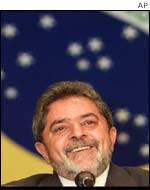
| | Thursday, 2 January, 2003, 22:13 GMT Brazil begins balancing act  The new government has a delicate balancing act As Brazil's new government began its tasks, the man in charge of the money has set himself the difficult challenge of keeping both the rich and the poor happy. Speaking the day after Luiz Inacio Lula da Silva took over the Presidency, at a massive ceremony in the capital Brasilia, new Finance Minister Antonio Palocci passionately dedicated himself to fighting Brazil's endemic poverty. Brazil, he said, lived "the paradox of a state that spends a lot, but in which few benefit", promising to unveil economic targets within a week.
"We are going to preserve fiscal responsibility, the control of inflation and our floating exchange rate," he told a ceremony to mark his arrival at the Finance Minister. "We are not going to reinvent the basic principles of economic policy. We, in fact, have a much more ambitious project: to reinvent the Brazilian state and its place in society." Tightrope Mr Palocci's determination reflects the balancing act Lula's government is going to have to perform. Elected at the head of the Workers' Party on the fourth attempt, Brazil's new president is a former steelworker and lifelong trade unionist who - in the eyes of the third of Brazilians stuck in poverty - could rescue them from penury. His massive majority was built on promises to tackle the corruption endemic to Brazil, the huge economic inequality between the elite few and the public at large, and the immense, $260bn debt burden crippling the country's finances. But against that comes the financial markets, whose fear of the country's first leftwing president led to a near-40% slump last year in the value of the currency, the real, coupled with massive falls on the main Bovespa stock market in Sao Paulo. Fiscal prudence is a necessity to avoid further financial carnage - and to stick to the 3.75% budget surplus imposed by the International Monetary Fund in exchange for a $30bn support loan. Positive trading Lula had already agreed to honour the IMF's terms ahead of the election, and his first full day in office saw the markets respond positively, albeit on half the normal daily volume of trading. The Bovespa ended the day up almost 3% to 11,602.9 points, while the real edged slightly higher to close up half a centavo at 3.54 to the US dollar. "Lula got off to a good start. His speeches were very realistic, emphasising that a new government is indeed in office, but that changes won't happen overnight," said ING chief economist Marcelo Salomon. "He addressed the need to push through key reforms right away, and if he does so, markets will continue to react well." | |
See also:  02 Jan 03 | Americas 01 Jan 03 | Media reports 30 Dec 02 | Business 21 Nov 02 | Business 20 Nov 02 | Business 29 Oct 02 | Americas 31 Dec 02 | Country profiles 01 Jan 03 | Americas 02 Jan 03 | Americas Internet links: The BBC is not responsible for the content of external internet sites Top Business stories now: Links to more Business stories are at the foot of the page. | ||||||||||||||||||||||||||||||||||||||||||||||||||||||||||||||||||||||||||||||||||||||||||||||||||||||||||||||||||||||||||||||||||||||||||||||||||||||||||||||||||||||||||||||||||||||||||||||||||||||||
 | |
|  E-mail this story to a friend E-mail this story to a friend |
| |
| Links to more Business stories |
| | | ||
 | ||||
 | | Back to top
| ||
| ---------------------------------------------------------------------------------- To BBC Sport>> | To BBC Weather>> | To BBC World Service>> ---------------------------------------------------------------------------------- © MMIII | News Sources | Privacy |