
|
 |
 | | | | | | |||||||||||||||||||||||||||||||||||||||||||||||||||||||||||||||||||||||||||||||||||||||||||||||||||||||||||||||||||||||||||||||||||||||||||||||||||||||||||||||
| | | You are in: Business | |||||||||||||||||||||||||||||||||||||||||||||||||||||||||||||||||||||||||||||||||||||||||||||||||||||||||||||||||||||||||||||||||||||||||||||||||||||||||||||||||
|
| | Thursday, 21 November, 2002, 16:51 GMT Brazil warned to tread carefully over debt 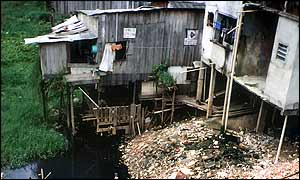 Many Brazilians see Lula as the ticket out of the favelas Brazil's huge debt burden still threatens to spoil things for new president Luiz Inacio Lula da Silva, the Organisation for Economic Co-operation & Development has warned. In its six-monthly World Economic Outlook, the 30-member Paris-based organisation said that the $260bn Brazil owes the rest of the world risks destabilising Latin America's largest economy. Much of the debt is linked to short-term interest rates, and so the government might be hoping to bring rates down so as to save debt service costs and engender better growth than the 1.2% in 2002 and 2% in 2003 that the OECD predicted. But that would be a mistake, the report warned. "Such a policy would likely lead to a vicious cycle of rising inflation, declines in confidence and depreciation of the currency," it said. Hard times Earlier this year, Brazilians elected as president a left-winger - Lula - instead of the free-market "safe pair of hands" that investors perceived Jose Serra, his main opponent, to be. But investors mistrusted Lula, partly for his redistributive politics and partly on grounds of inexperience. The result was a currency that plummeted in value by more than a third, triggering sharply rising prices, as international investors bailed out of Brazilian assets. Investment in the first half of the year was 7% lower than in the corresponding period of 2001, while growth has stagnated. The meltdown in neighbouring Argentina has not helped either, cutting into exports. Upside The risk of inflation - which the OECD predicts will be 9% for 2002, above the 5.5% target for the second year in a row - caused the central bank to raise interest rates earlier this week for the second time in as many months. A $30bn loan package from the International Monetary Fund is dependent on that and other targets, such as keeping a primary budget surplus of at least 3.75% of national output. But all is not completely gloomy, the OECD said. "A more positive outcome would emerge if the new government managed to re-establish market confidence quickly, thereby reducing exchange rate pressures and the negative impact of the ratio of dollar denominated debt to GDP [gross domestic product]," according to the report. And as unemployment was revealed to have hit a two-year high of 7.7% in October, signs that Lula is serious about reforms of pensions and the labour market pleased the OECD. | |
See also:  20 Nov 02 | Business 18 Nov 02 | Business 11 Nov 02 | Business 05 Nov 02 | Business 01 Nov 02 | Business 29 Oct 02 | Americas 28 Oct 02 | Business Internet links: The BBC is not responsible for the content of external internet sites Top Business stories now: Links to more Business stories are at the foot of the page. | |||||||||||||||||||||||||||||||||||||||||||||||||||||||||||||||||||||||||||||||||||||||||||||||||||||||||||||||||||||||||||||||||||||||||||||||||||||||||||||||
| |
|  E-mail this story to a friend E-mail this story to a friend |
| |
| Links to more Business stories |
| | | ||
 | ||||
 | | Back to top
| ||
| ---------------------------------------------------------------------------------- To BBC Sport>> | To BBC Weather>> | To BBC World Service>> ---------------------------------------------------------------------------------- © MMIII | News Sources | Privacy |






