
|
 |
 | | | | | | ||||||||||||||||||||||||||||||||||||||||||||||||||||||||||||||||||||||||||||||||||||||||||||||||||||||||||||||||||||||||||||||||||||||||||
| | | You are in: Business | ||||||||||||||||||||||||||||||||||||||||||||||||||||||||||||||||||||||||||||||||||||||||||||||||||||||||||||||||||||||||||||||||||||||||||||
|
| | Monday, 2 December, 2002, 11:56 GMT HK treason law worries bankers 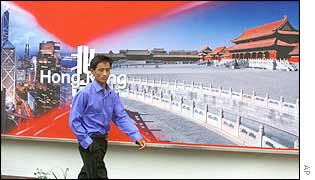 The law is designed to protect China's national security Fears are growing that proposed new laws on treason and subversion could pose a threat to Hong Kong's prized financial sector. The new legislation is required under Article 23 of the Basic Law, the rulebook negotiated between China and the UK as part of the handback of the territory in 1997. Journalists and human rights groups have been through the Article 23 law, and have warned that it gives Beijing hitherto unprecedented powers over the territory's decision-making. The surprise is that some in the financial community seem to share their concerns, saying that the "one country, two systems" deal is unravelling - and that Hong Kong's position as a financial hub for Asia is threatened as a result. Embarrassment Under the Basic Law, Hong Kong is obliged to enact laws which prevent the "Special Administrative Region" from being used as a jumping-off point for foreign or domestic treason or subversion. The government of chief executive Tung Chee-Hwa has yet to release the exact wording of its proposed legislation, and may well not do so till immediately before the territory's legislature - filled with pro-Beijing businesspeople - votes on it. The fear is that rules restricting government contractors and public servants' ability to release "state secrets" could be interpreted to include almost any information the government, either in Hong Kong or Beijing, finds embarrassing. And in financial terms, the involvement of the state in many Chinese businesses means that not only financial journalists, but also analysts, economists and corporate researchers, could find themselves in trouble for reporting information from mainland sources. Competitive advantage The bankers are, of course, cautious about voicing their concerns. "We want to make certain that we have a free flow of information," David Li, chairman of the middle-sized lender Bank of East Asia, told reporters. "People say that Hong Kong has a competitive advantage over Singapore because they say we have more freedom." He and his peers are meeting Hong Kong's security chief on 5 December to discuss their concerns and those of foreign bankers, he said. | | See also:  29 Nov 02 | Business 22 Nov 02 | Asia-Pacific 13 Nov 02 | Business 11 Nov 02 | Business 24 Sep 02 | Asia-Pacific 18 Sep 02 | Business 12 Jul 02 | Asia-Pacific 01 Jul 02 | Asia-Pacific 15 Apr 02 | Asia-Pacific Internet links: The BBC is not responsible for the content of external internet sites Top Business stories now: Links to more Business stories are at the foot of the page. | ||||||||||||||||||||||||||||||||||||||||||||||||||||||||||||||||||||||||||||||||||||||||||||||||||||||||||||||||||||||||||||||||||||||||||
| |
|  E-mail this story to a friend E-mail this story to a friend |
| |
| Links to more Business stories |
| | | ||
 | ||||
 | | Back to top
| ||
| ---------------------------------------------------------------------------------- To BBC Sport>> | To BBC Weather>> | To BBC World Service>> ---------------------------------------------------------------------------------- © MMIII | News Sources | Privacy |



