|
 |
 | | | | | | ||||||||||||||||||||||||||||||||||||||||||||||||||||||||||||||||||||||||||||||||||||||||||||||||||||||||||||||||||||||||||||||||||||||||||||||||||||||||||||||||
| | | You are in: Asia-Pacific | ||||||||||||||||||||||||||||||||||||||||||||||||||||||||||||||||||||||||||||||||||||||||||||||||||||||||||||||||||||||||||||||||||||||||||||||||||||||||||||||||||
|
| | Friday, 12 July, 2002, 09:42 GMT 10:42 UK HK backs 'dangerous' anti-terror law 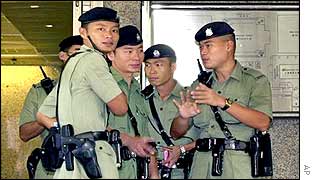 Critics fear the law could be used to stamp out dissent Hong Kong's government has passed a controversial new anti-terrorism bill which critics say will endanger civil liberties.
The Hong Kong Government argues that it urgently needs to enact the bill to fulfil China's commitments to the UN Security Council resolution against terrorism. The new law has angered human rights and legal groups who say it was passed in haste and gives the government sweeping powers to brand anyone a suspected terrorist. Defining terrorism The law defines a terrorist act as the use or threat of action to influence a government, or to intimidate or endanger the public, to advance a political, religious or ideological cause. Based on UNSC resolution 1373, it gives the government the power to freeze funds believed to be linked with terrorism and criminalises the act of funding terrorism. People who provide funds or resources, including weapons, to terrorists face up to 14 years in jail if convicted. The law also allows the government to confiscate assets believed to be linked to terrorists. Anyone who has been wrongly accused must prove their innocence in court if they want their property back. 'Affront to freedom' Security Secretary Regina Ip argued that the bill was essential to prevent Hong Kong becoming the "weakest link" in the global fight against terrorism. "As a financial hub, we can't rule out the possibility of terrorist funds flowing in," she told legislators. But legislator and lawyer Margaret Ng told BBC News Online the law rendered individuals extremely vulnerable. "People fighting for civil liberties can fall into the trap (of being named a terrorist) if the government really wants them to."
Furthermore, as the law then allows the suspect to be deprived of funds, they may then be unable to hire a defence lawyer, she said. Ms Ng said the law was moreover "contagious" as it prohibited the funding - even unknowingly - of a group or person branded as terrorist. Johann Wong, principle assistant secretary for security, countered that there was no danger of the law encroaching on human rights, as it was in line with international standards. He added that the government must go through the courts before acting on their suspicions, "and if you can't trust the courts, who can you trust?". But civil liberties groups fear that any law passed in Hong Kong could be subject to new interpretation if the government feels under pressure to operate according to the wishes of its sovereign ruler, Beijing. | | See also:  01 Jul 02 | Asia-Pacific 17 Jun 02 | Asia-Pacific 11 Jul 02 | Asia-Pacific Internet links: The BBC is not responsible for the content of external internet sites Top Asia-Pacific stories now: Links to more Asia-Pacific stories are at the foot of the page. | ||||||||||||||||||||||||||||||||||||||||||||||||||||||||||||||||||||||||||||||||||||||||||||||||||||||||||||||||||||||||||||||||||||||||||||||||||||||||||||||||
| |
|  E-mail this story to a friend E-mail this story to a friend |
| |
| Links to more Asia-Pacific stories |
| | | ||
 | ||||
 | | Back to top
| ||
| ---------------------------------------------------------------------------------- To BBC Sport>> | To BBC Weather>> | To BBC World Service>> ---------------------------------------------------------------------------------- © MMIII | News Sources | Privacy |