|
 |
 | | | | | | ||||||||||||||||||||||||||||||||||||||||||||||||||||||||||||||||||||||||||||||||||||||||||||||||||||||||||||||||||||||||||||||||||||||||||||||||||||||||||||||||
| | | You are in: Asia-Pacific | ||||||||||||||||||||||||||||||||||||||||||||||||||||||||||||||||||||||||||||||||||||||||||||||||||||||||||||||||||||||||||||||||||||||||||||||||||||||||||||||||||
|
| | Friday, 22 November, 2002, 10:02 GMT US warns HK over anti-subversion law 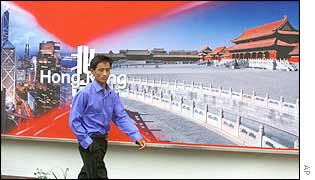 The law is designed to protect China's national security The US Government has warned Hong Kong that its proposed new anti-subversion law must not harm civil liberties in the territory.
Human rights and pro-democracy groups have said China could use the new laws to suppress freedoms inherited from British rule, as well as to ban groups - such as the religious group Falun Gong - it considers a threat. "The Hong Kong people and the international community have raised serious concerns about the proposed legislation," US State Department deputy spokesman Philip Reeker said. He added that the US was concerned that any system in the territory must be "predictable, transparent and fair". Stiff penalties The Basic Law - Hong Kong's mini-constitution which has governed the territory since its 1997 return to Chinese sovereignty from British rule - requires an anti-subversion bill to be passed under article 23.
The proposed law is due to be enacted after a three-month consultation exercise ends 24 December. Its purpose is to protect the "sovereignty, territorial integrity, unity and national security" of China and the Hong Kong Government. Under the law, expressing or reporting an opinion is not criminalised, unless it threatens to "to levy war or use force or other serious offences to sedition". But emergency powers would allow a property to be entered and an individual to be stopped and searched in order to investigate suspected treason, secession, sedition or subversion. The penalty if found guilty for such crimes would be life in prison. 'Fundamental freedoms' Mr Reeker said that although the US was encouraged by the fact that Hong Kong had listened to criticism of the law, he encouraged the authorities to publish the full text of the law, which so far they have refused to do. He also added that, ultimately, "a democratically elected government, answerable to the will of the people, is the best way to ensure the protection of fundamental freedoms in Hong Kong". Britain has also expressed its concerns regarding the law, saying in a statement on Monday that any laws which undermined basic freedoms would be "seriously damaging" to the territory. And the Paris-based World Association of Newspapers warned on Wednesday that the legislation would "give excessive weight to national security at the expense of civil liberties, especially press freedom and freedom of speech". However the Hong Kong security bureau on Wednesday said that "the way of life, the rights and freedoms guaranteed for and enjoyed by Hong Kong residents, including freedom of the press, will not be affected by implementing the proposals." | | See also:  24 Sep 02 | Asia-Pacific 12 Jul 02 | Asia-Pacific 17 Jun 02 | Asia-Pacific 01 Jul 02 | Asia-Pacific 15 Apr 02 | Asia-Pacific 12 Jul 01 | Asia-Pacific Internet links: The BBC is not responsible for the content of external internet sites Top Asia-Pacific stories now: Links to more Asia-Pacific stories are at the foot of the page. | ||||||||||||||||||||||||||||||||||||||||||||||||||||||||||||||||||||||||||||||||||||||||||||||||||||||||||||||||||||||||||||||||||||||||||||||||||||||||||||||||
| |
|  E-mail this story to a friend E-mail this story to a friend |
| |
| Links to more Asia-Pacific stories |
| | | ||
 | ||||
 | | Back to top
| ||
| ---------------------------------------------------------------------------------- To BBC Sport>> | To BBC Weather>> | To BBC World Service>> ---------------------------------------------------------------------------------- © MMIII | News Sources | Privacy |