|
 |
 | | | | | | ||||||||||||||||||||||||||||||||||||||||||||||||||||||||||||||||||||||||||||||||||||||||||||||||||||||||||||||||||||||||||||||||||||||||||||||||||||||||||||||||||||||||||||||||||||||||||||||||||||||||||||||||||||||||||||||
| | | You are in: Business | ||||||||||||||||||||||||||||||||||||||||||||||||||||||||||||||||||||||||||||||||||||||||||||||||||||||||||||||||||||||||||||||||||||||||||||||||||||||||||||||||||||||||||||||||||||||||||||||||||||||||||||||||||||||||||||||||
|
| | Friday, 8 November, 2002, 13:37 GMT Record leap for house prices 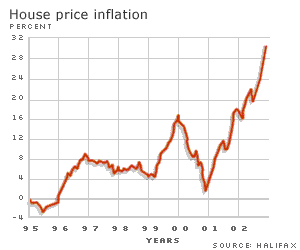 More evidence has emerged that the UK's housing market is still booming.
The overall trend of a buoyant market got further confirmation from the government's official register of land prices, which showed an 18% rise in house prices in the three months to the end of September. Those figures - generally regarded as more accurate - also showed that house prices in East Anglia were rising fastest, at an annual rate of 24%, while prices in London had slowed to 15%.
The Land Registry found that an average property in England and Wales is now worth �146,150,compared with an average value of �123,856 a year ago. Meanwhile, the number of properties sold increased by 6.44% to 328,184 from 308,323 during the same period in 2001. "Last month's record rise in prices underlines the continuing strength of the U.K. housing market as the low level of interest rates and fallen unemployment drives up demand," said Martin Ellis, chief economist at Halifax. Rates on hold
With interest rates at record lows, many individuals are investing in housing rather than the stock market, and many more are using their growing housing equity as security for borrowing. The strong housing market - and in particular the disparity between house prices in the South and the rest of the country - is also increasing regional differences in wealth, and making it difficult for firms and public sector bodies to recruit new employees. Many economists expect that continued strong job growth and high wages will help keep house prices high. They argue that only after an economic slowdown which leads to higher unemployment will house prices begin to fall back towards more affordable levels. Confusion However, there is some confusion over how fast prices are now rising - and whether they are slowing down. A rival survey by the Nationwide suggested that house prices only rose by 1.4% in October, although the overall rate for the year was 24%. Other surveys have suggested that the housing market is softening at the top end of the market in London, where City firms have made big cuts in their bonus payments. What appears to be happening - at least according to the Land Registry figures - is that the boom is slowing in London and the Southeast, but still accelerating in selected regions outside London, for example in East Anglia where prices rose by 24% for the year. This would be consistent with the fact that the Halifax sample is generally thought to be based on a sample of mortgages somewhat skewed towards the North, while the Nationwide disproportionately lends in Southern England. Additionally, this month's figures were distorted by the fact that one year ago, house prices fell temporarily as a result of people's fears after the terrorist attacks on 11 September. Halifax chief economist Martin Ellis said that two-thirds of the increase in the annual rate (from 24% to 30%) was due to this statistical fluke. | |
See also:  08 Nov 02 | Business 08 Nov 02 | Business 18 Oct 02 | Business 04 Oct 02 | Business 04 Oct 02 | Business 02 Oct 02 | Business 09 Sep 02 | Business 14 Aug 02 | Business Top Business stories now: Links to more Business stories are at the foot of the page. | ||||||||||||||||||||||||||||||||||||||||||||||||||||||||||||||||||||||||||||||||||||||||||||||||||||||||||||||||||||||||||||||||||||||||||||||||||||||||||||||||||||||||||||||||||||||||||||||||||||||||||||||||||||||||||||||
| |
|  E-mail this story to a friend E-mail this story to a friend |
| |
| Links to more Business stories |
| | | ||
 | ||||
 | | Back to top
| ||
| ---------------------------------------------------------------------------------- To BBC Sport>> | To BBC Weather>> | To BBC World Service>> ---------------------------------------------------------------------------------- © MMIII | News Sources | Privacy |