
|
 |
 | | | | | | |||||||||||||||||||||||||||||||||||||||||||||||||||||||||||||||||||||||||||||||||||||||||||||||||||||||||||||||||||||||||||||||||||||||||||||||||||||||||||||||||
| | | You are in: Business | |||||||||||||||||||||||||||||||||||||||||||||||||||||||||||||||||||||||||||||||||||||||||||||||||||||||||||||||||||||||||||||||||||||||||||||||||||||||||||||||||||
|
| | Friday, 18 October, 2002, 11:46 GMT 12:46 UK House prices to head higher, says lender 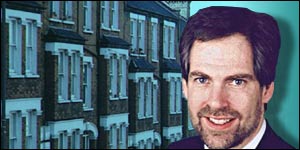 Halifax economist Martin Ellis is optimistic
House prices should rise by at least 10% during 2003, according to predictions by the UK's biggest mortgage lender, Halifax. The market will remain "fairly buoyant", group economist, Martin Ellis, told BBC News Online, dismissing fears of a crash. But Halifax's forecast for next year is much lower than this year's soar away prices. According to Halifax's latest monthly survey, house prices have increased by 24.2% over the past year. Mr Ellis said that a lower rise next year would be "realistic in terms of the market". "We are seeing some signs that the market is beginning to cool down and we expect quite a sharp deceleration in the rate of house price growth." Market's brakes One factor which would affect the future direction of the housing market next year was affordability, according to Mr Ellis. In particular, increasing difficulties for first-time buyers to get on the housing ladder would act as a "brake" on the market. Mr Ellis expected this to happen before the end of Spring. "We've been expecting [a slowdown in the first-time buyer market], but it hasn't bitten yet. "It's difficult to predict when, but we will see it in the next six months. It will be a brake in the housing market and cause house price inflation to ease. " Mr Ellis' comments reflected a recent survey by the Yorkshire bank. It said the market was heading for an "inevitable slowdown" because of a shortage of affordable properties for first-time buyers. Outside the South East Outside the South of England, the market will remain fairly buoyant because houses are still relatively affordable, Mr Ellis said. But within the South of England, including East Anglia, house price growth will slow, he predicted. "We can't discount falls in certain areas. But we don't expect widespread falls - not even across the capital," Mr Ellis said. One factor in the capital that could cause the market to slow would be the state of the employment market in the financial markets. Smaller bonuses and weaker demand at the top end could push the market down. Eighties-style crash? With a cut in interest rates likely, cheap mortgage deals would continue to fuel the market. "In order for it all to crash, we need a trigger," said Mr Ellis. "We need a big increase in interest rates, or a big increase in unemployment, and it is difficult to foresee those things." But one factor that could create a crash would be a further deterioration in the state of the world economy. "If we were to see things getting worse in the United States, and this dragged down the world economy, it would lead to an abrupt slowdown in the housing market," he said. | |
See also:  18 Oct 02 | Business 18 Oct 02 | Business 17 Oct 02 | Business Top Business stories now: Links to more Business stories are at the foot of the page. | |||||||||||||||||||||||||||||||||||||||||||||||||||||||||||||||||||||||||||||||||||||||||||||||||||||||||||||||||||||||||||||||||||||||||||||||||||||||||||||||||
| |
|  E-mail this story to a friend E-mail this story to a friend |
| |
| Links to more Business stories |
| | | ||
 | ||||
 | | Back to top
| ||
| ---------------------------------------------------------------------------------- To BBC Sport>> | To BBC Weather>> | To BBC World Service>> ---------------------------------------------------------------------------------- © MMIII | News Sources | Privacy |






