
|
 |
 | | | | | | |||||||||||||||||||||||||||||||||||||||||||||||||||||||||||||||||||||||||||||||||||||||||||||||||||||||||||||||||||||||||||||||||||||||||||||||||||||||||||||||||||||||||||||||||||||||||||||||||||||||||||||
| | | You are in: Business | |||||||||||||||||||||||||||||||||||||||||||||||||||||||||||||||||||||||||||||||||||||||||||||||||||||||||||||||||||||||||||||||||||||||||||||||||||||||||||||||||||||||||||||||||||||||||||||||||||||||||||||||
|
| | Monday, 14 October, 2002, 13:20 GMT 14:20 UK Tourism industry braces for panic 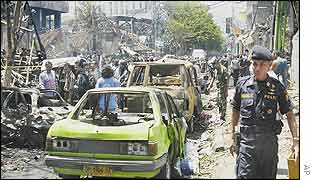 Tour operators' winter season is threatened
The car bomb that blew apart a popular night spot on the Indonesian resort island of Bali on Saturday has also ripped a hole in the travel industry's hopes of recovery.
Tourism economists had reckoned it would take the industry three years to make up the losses incurred since the 11 September terror attacks on the United States. Now all bets are off. The head of the World Travel and Tourism Council (WTTC) boarded a plane on Monday for emergency talks with the Indonesian government to "hammer out a plan of action to restore visitor confidence" in Indonesia, the world's most populous Muslim nation, his spokeswoman told BBC News Online. High season The Association of British Travel Agents (ABTA) was putting on a brave face: "I don't think people will be put off visiting Muslim countries," said ABTA spokesman Keith Betton. The shattered Balinese resort of Kuta lies in a region that has picked up visitors from the reduced popularity of US theme park-based family holidays and Middle Eastern destinations since the attack on the World Trade Center. Kuta itself is "an Australian Benidorm", said one analyst. The mass-market resort is popular with younger tourists and international backpackers. High season was just getting underway in Australasia, a region that industry experts say is heavily booked in the run-up to Christmas. Shares in airlines and tour operators slid on European markets as investors braced themselves for a wave of holiday cancellations. British Airways and Lufthansa, Club Med, Swiss group Kuoni, and Europe's largest travel group TUI all felt the pain. Big business The travel industry makes up 10% of the global economy and provides 198 million jobs worldwide, according to the WTTC.
Globally, the industry is worth $4,211bn (�2,696bn), the WTTC says. So does the bombing threaten to sink more airlines into bankruptcy, as happened after 11 September, and hurt the travel companies' bottom lines? The answer depends on who turns out to have planted the Bali bomb. The worst case scenario, analysts say, would be another, similar attack soon, especially if it took place far away from Indonesia. At present, speculation about suspects ranges from Al-Qaeda-linked Indonesian groups to remnants of the country's old regime with a purely domestic focus. "In terms of tour operators, the direct financial consequence is probably not that great, but it's more a question of what it might do to overall traveller confidence," says Malcolm Preston, a partner at accountancy firm PricewaterhouseCoopers in London, who specialises in the travel industry. "If another incident like this happens in short scale, I think that would really dent traveller confidence," he adds. Local impact Contracts with hotels and airlines usually protect tour operators against cancellations. When dealing with long haul destinations such as Bali, tour firms tend to reserve hotel rooms and airline seats several months ahead but they do not pay for services in advance. The biggest immediate losers are therefore likely to be local businesses in tourist hot spots such as Indonesia, neighbouring Malaysia and Thailand. Next hardest hit will be Australia's outward bound tour operators, just entering their summer season, though domestic destinations could benefit. The beach can wait Analysts say there could be more pain in store for European and US airlines since most travellers to Indonesia, Malaysia and Thailand use scheduled flights rather than chartered. Although Christmas bookings to Australia from the UK are unlikely to be affected, travellers planning a longer break with a beach stop-over in South East Asia may well wait till next year, analysts think. The winners, yet again, could be budget airlines flying short-haul European routes, who have taken market share from bigger national carriers since 11 September. The attack also raised fears about investor confidence in South East Asian economies, many of them just recovering from their second recession in five years, and pushed down regional stock markets. "We are not talking about tourism only, but about the economy as a whole. The message is clear that investors around the world will not come here," said Adrian Rusmana, head of research at BNI Securities in the Indonesian capital, Jakarta. Late bookings But tourism is big business in the Asia Pacific region, employing every 15th person, the WTTC says. It is planning to host an emergency summit in London in November calling for "a new tourism security convention". UK bookings to mass market destinations this year were about 9% below 2001 levels. The industry's recovery from 11 September was already being held back by rising economic insecurity among consumers, shown in a trend towards late bookings, analysts say. | |
Top Business stories now:  Links to more Business stories are at the foot of the page. | |||||||||||||||||||||||||||||||||||||||||||||||||||||||||||||||||||||||||||||||||||||||||||||||||||||||||||||||||||||||||||||||||||||||||||||||||||||||||||||||||||||||||||||||||||||||||||||||||||||||||||||
| |
|  E-mail this story to a friend E-mail this story to a friend |
| |
| Links to more Business stories |
| | | ||
 | ||||
 | | Back to top
| ||
| ---------------------------------------------------------------------------------- To BBC Sport>> | To BBC Weather>> | To BBC World Service>> ---------------------------------------------------------------------------------- © MMIII | News Sources | Privacy |






