|
 |
 | | | | | | |||||||||||||||||||||||||||||||||||||||||||||||||||||||||||||||||||||||||||||||||||||||||||||||||||||||||||||||||||||||||||||||||||||||||||||||||||||||||||||||||||||||||||||||||||||||||
| | | You are in: Business | |||||||||||||||||||||||||||||||||||||||||||||||||||||||||||||||||||||||||||||||||||||||||||||||||||||||||||||||||||||||||||||||||||||||||||||||||||||||||||||||||||||||||||||||||||||||||||
|
| | Monday, 14 October, 2002, 05:28 GMT 06:28 UK Bali blast shock for Indonesian economy  Investors are nervous about Indonesian instability Indonesia's currency and stock market have tumbled sharply, as investors worried about the economic effects of Saturday's gigantic bomb blast on the island of Bali. The Jakarta Stock Exchange index closed at a four-year low of 337.4 points, down 38.9 points, or 10.4%, while the local currency, the rupiah, fell 3.5% from Friday to finished the day at 9,330 to the US dollar. The central bank, Bank Indonesia, has intervened in the markets to prop up the rupiah and may have to raise interest rates to further defend the currency. The falls had a knock-on effect on markets around Asia, especially in the Philippines, another country seen as potentially vulnerable to terrorist attacks. And in the longer term, the weekend bomb has raised questions over Indonesia's fragile economy, which is highly dependent on tourist income from Bali. Call for action The Indonesian government has insisted that the attack will not fundamentally change the economic outlook.
But most analysts warned that some sort of action would be necessary to avoid a short-term economic shock. "I think the central bank will stop cutting its rates for the moment and might even start raising them again," Bank Mandiri chief economist Martin Panggabean told the Jakarta Post newspaper. The central bank has also been selling dollars for rupiah, hoping to support the exchange rate. Money worries But while Monday's slides may be rapidly reversed, the main concern is over the longer-term impact on the country's economy. Serious security worries could persuade foreign firms to leave the country. 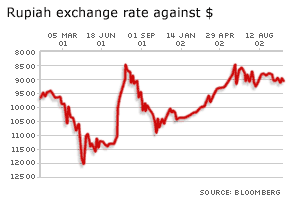 "The bomb blast in Bali will create the perception that investment in Indonesia is very risky," said Rifan Financindo Securities analyst Hari Ajid. Investors on the ground in Indonesia have long been nervous about political instability, and have only started setting up in large numbers since the arrival of President Megawati Sukarnoputri last year - something that spurred a modest economic boom in recent months. Peace shattered Making matters worse; any damage to Bali's tourist industry will have a disproportionate effect on the Indonesian economy. Bali receives about 1.5 million visitors a year, roughly one-third of the Indonesian total. And while much of the rest of the country struggles to bring in foreign exchange, Bali's visitors tend to be free-spending Western tourists. Bali's attraction as a tourist destination is largely based on its reputation as safe and peaceful. | |
See also:  14 Oct 02 | Asia-Pacific Internet links: The BBC is not responsible for the content of external internet sites Top Business stories now: Links to more Business stories are at the foot of the page. | |||||||||||||||||||||||||||||||||||||||||||||||||||||||||||||||||||||||||||||||||||||||||||||||||||||||||||||||||||||||||||||||||||||||||||||||||||||||||||||||||||||||||||||||||||||||||
 | |
|  E-mail this story to a friend E-mail this story to a friend |
| |
| Links to more Business stories |
| | | ||
 | ||||
 | | Back to top
| ||
| ---------------------------------------------------------------------------------- To BBC Sport>> | To BBC Weather>> | To BBC World Service>> ---------------------------------------------------------------------------------- © MMIII | News Sources | Privacy |