|
 |
 | | | | | | |||||||||||||||||||||||||||||||||||||||||||||||||||||||||||||||||||||||||||||||||||||||||||||||||||||||||||||||||||||||||||||||||||||||||||||||||||||||||||||||||||||||||||||
| | | You are in: Business | |||||||||||||||||||||||||||||||||||||||||||||||||||||||||||||||||||||||||||||||||||||||||||||||||||||||||||||||||||||||||||||||||||||||||||||||||||||||||||||||||||||||||||||||
|
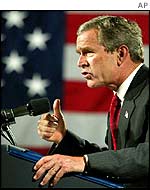
| | Monday, 7 October, 2002, 15:32 GMT 16:32 UK Bush intervenes in ports row 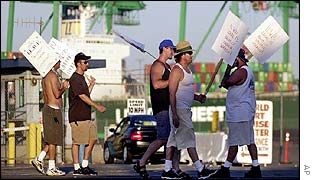 The longshoremen could be forced back to work President George W Bush has intervened in the dock dispute crippling commerce on the West Coast of the US.
The White House announced on Monday that it was convening a fact-finding board of inquiry, the first step necessary before the administration can order the dockers back to work. "Out of concern for the economy and jobs, the president this morning signed an executive order to create a board of inquiry," said White House spokesman Ari Fleischer. The inquiry is likely to take a week. Election backlash? After that, it is up to the White House to convince a federal judge that the dispute would "imperil the national health or safety".
Until now the administration has wanted to avoid stepping in, for fear that a union backlash could harm Republican candidates in November's Congressional elections. Different opinions The dispute started when management locked workers out, complaining that they were slowing down cargo handling by working strictly to safety rules. They also say unions are refusing to accept modernisation of the 29 West Coast ports, which - unlike their eastern seaboard equivalents - still use paper trails, rather than electronic systems, to track containers. The unions, on the other hand, say they are simply responding to management neglect of safety issues. Federally appointed mediators threw in the towel on Sunday, saying that "no progress was achievable in the next few days." With that in mind, the White House's Mr Fleischer told reporters, the inquiry was the logical step. The move did not mean an order to reopen would automatically follow, he said. But he went on: "The longer the parties are unable to come to an agreement, the bigger the damage to the economy down the line. "That's not fair." | |
See also:  07 Oct 02 | Business 06 Oct 02 | Business 06 Oct 02 | Business 08 Oct 02 | Business 03 Oct 02 | Business 01 Oct 02 | Business Internet links: The BBC is not responsible for the content of external internet sites Top Business stories now: Links to more Business stories are at the foot of the page. | |||||||||||||||||||||||||||||||||||||||||||||||||||||||||||||||||||||||||||||||||||||||||||||||||||||||||||||||||||||||||||||||||||||||||||||||||||||||||||||||||||||||||||||
| |
|  E-mail this story to a friend E-mail this story to a friend |
| |
| Links to more Business stories |
| | | ||
 | ||||
 | | Back to top
| ||
| ---------------------------------------------------------------------------------- To BBC Sport>> | To BBC Weather>> | To BBC World Service>> ---------------------------------------------------------------------------------- © MMIII | News Sources | Privacy |