
|
 |
 | | | | | | ||||||||||||||||||||||||||||||||||||||||||||||||||||||||||||||||||||||||||||||||||||||||||||||||||||||||||||||||||||||||||||||||||||||||||||
| | | You are in: Business | ||||||||||||||||||||||||||||||||||||||||||||||||||||||||||||||||||||||||||||||||||||||||||||||||||||||||||||||||||||||||||||||||||||||||||||||
|
| | Monday, 7 October, 2002, 08:15 GMT 09:15 UK US port strike talks collapse 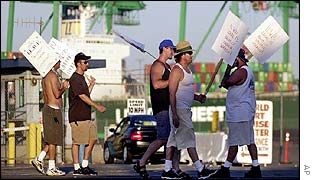 The longshoremen are in a strong position Talks to end a US port strike - which is costing the economy an estimated $1bn a day - have broken down indefinitely.
The dispute has closed 29 ports on the Pacific coast of the US, some of the busiest in the world. Over the past few days, air freight rates have soared, as US companies struggled to maintain supplies of imported components. Longshoremen are worried about plans to install new hi-tech equipment, and insist on more favourable pension and benefit terms in their employment contracts, which are up for renewal after expiring in July. No compromise Unions and management had been in discussions over the weekend, and the talks were considered likely to bring the dispute to an end. But late on Sunday night, the International Longshore and Warehouse Union rejected an offer to boost pay and healthcare perks in a package estimated as being worth $1bn. "[The employers] presented a comprehensive proposal to the longshore union, which would have made their members the highest paid blue-collar workers in America," said Steve Sugerman, a spokesman for the Pacific Maritime Association. Employers have also offered a 90-day renewal of contracts, in an attempt to buy time and reopen ports until details of new contracts can be hammered out. But with many US firms becoming increasingly desperate to import goods ahead of the pre-Christmas rush, trade unions are in a strong bargaining position. Starting to suffer There are growing concerns over the economic effect of a prolonged strike, Since trade through US Pacific ports is in excess of $300bn annually, a complete stoppage costs some $1bn a day. But some economists calculate that the daily cost could rise to about $2.4bn as more companies resort to air freight, which costs up to 10 times more than shipping. Already, some Asian car companies have scaled back production and laid off jobs at their US factories, while technology giants Microsoft and Intel have said they are worried about the impact of the stoppage. The US is a heavily import-reliant economy, and particularly depends on technology components - such as silicon chips - from Asia. | | See also:  06 Oct 02 | Business 06 Oct 02 | Business 08 Oct 02 | Business 03 Oct 02 | Business 01 Oct 02 | Business Internet links: The BBC is not responsible for the content of external internet sites Top Business stories now: Links to more Business stories are at the foot of the page. | ||||||||||||||||||||||||||||||||||||||||||||||||||||||||||||||||||||||||||||||||||||||||||||||||||||||||||||||||||||||||||||||||||||||||||||
| |
|  E-mail this story to a friend E-mail this story to a friend |
| |
| Links to more Business stories |
| | | ||
 | ||||
 | | Back to top
| ||
| ---------------------------------------------------------------------------------- To BBC Sport>> | To BBC Weather>> | To BBC World Service>> ---------------------------------------------------------------------------------- © MMIII | News Sources | Privacy |





