
|
 |
 | | | | | | ||||||||||||||||||||||||||||||||||||||||||||||||||||||||||||||||||||||||||||||||||||||||||||||||||||||||||||||||||||||||||||||||||||||||||||||||||||
| | | You are in: Business | ||||||||||||||||||||||||||||||||||||||||||||||||||||||||||||||||||||||||||||||||||||||||||||||||||||||||||||||||||||||||||||||||||||||||||||||||||||||
|
| | Tuesday, 10 September, 2002, 22:58 GMT 23:58 UK Colombia scraps 'tax for weapons' plan 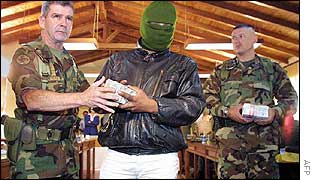 The army is giving money to informers Sharp cuts in public spending are the price that has to be paid to fight left-wing rebels, Colombia's new right-wing government has warned. The administration of President Alvaro Uribe had hoped to fund the massive military build-up he has promised with big tax hikes. But the 38-year-old war - so far with a casualty list topping 37,000 - has left the economy in tatters, and economists and businessmen have argued that higher taxes would simply make matters worse. As a result, plans to impose new taxes totalling 2.5-3 trillion pesos ($922m-1.1bn; 945m-1.14bn euros) have been scaled back to 1.8 trillion pesos, Finance Minister Roberto Junguito told Congress in the capital city, Bogota. Public spending cuts will now have to go far beyond the $185m or so - largely in non-core areas - which he had originally planned, he warned. The government is hoping that international lenders will help fund $2.7bn in social programmes, freeing up money for the fight. It has already imposed one new "war tax", a one-off impost on assets worth more than $60,000. Hard road The change of tack comes at a difficult time for Colombia - not that its recent economic past offers many examples of anything else. Budget deficits are likely to spiral well above the limit agreed with the International Monetary Fund (IMF) of 2.6% of national output. Public debt is likely to top 55% of gross domestic product by the end of this year, while annual economic growth is a stagnant 2%. Its current $2.7bn IMF loan deal expires in December, and while US support is guaranteed - the US is already plunging hundreds of millions into the Latin American state's fight against cocaine traffickers - the negotiations are likely to be tough. On top of that, the public sector unions are already angry about current cutback plans, which reduce non-wage benefits for city and provincial government staff. | |
See also:  09 Sep 02 | Americas 09 Sep 02 | Americas 08 Sep 02 | Americas 05 Sep 02 | Americas 29 Aug 02 | Americas 24 May 02 | Business 07 Mar 02 | Business Internet links: The BBC is not responsible for the content of external internet sites Top Business stories now: Links to more Business stories are at the foot of the page. | ||||||||||||||||||||||||||||||||||||||||||||||||||||||||||||||||||||||||||||||||||||||||||||||||||||||||||||||||||||||||||||||||||||||||||||||||||||
| |
|  E-mail this story to a friend E-mail this story to a friend |
| |
| Links to more Business stories |
| | | ||
 | ||||
 | | Back to top
| ||
| ---------------------------------------------------------------------------------- To BBC Sport>> | To BBC Weather>> | To BBC World Service>> ---------------------------------------------------------------------------------- © MMIII | News Sources | Privacy |






