
|
 |
 | | | | | ||||||||||||||||||||||||||||||||||||||||||||
| | You are in: Business | ||||||||||||||||||||||||||||||||||||||||||||||
 | | Thursday, 7 March, 2002, 14:27 GMT Colombia considers 'war tax' 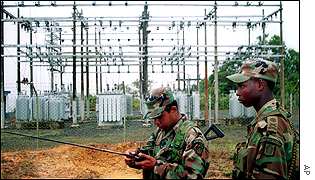 Rebels have targetted Colombia's infrastructure The Colombian government is planning to introduce a "war tax" so it can lift spending on the fight against rebel forces which now control over half its territory. The South American country is embroiled in a civil war that has lasted nearly 40 years - a conflict in which more than 37,000 people have lost their lives. Vice President Gustavo Bell said Colombia needs to increase its military expenditure by at least $873m to tackle the violence. He said the government is looking into a special war tax, budget cuts and fresh loans to finance the war which has escalated since peace talks collapsed in February. Sacrifice Hopes for a settlement had been growing in recent years. The government introduced a peace bond a decade ago to fund schools and hospitals in rebel-held territories. "A lot of people in the business class in Colombia seem prepared to make some sort of financial sacrifice," correspondent Ruth Morris told the BBC's World Business Report. Business hopes that even if there cannot be peace in Colombia, at least the government can weaken the guerrillas' grip on the economy. With an election due soon, the goverment is making a push against the two major guerilla groups - the Revolutionary Armed Forces of Colombia (FARC) and the National Liberation Army (ELN). "There is a concerted effort to go after the rebels right now because the three-and-a-half-year peace process collapsed two weeks ago," Ms Morris said. Colombians who were not really behind the peace process are now looking for some real results against the FARC in particular. Insurgents have targetted infrastructure, destroying telecommunication towers, electricity pylons, bridges, aquaducts and drinking water systems. Extortion There is anxiety among the large corporations who do business in Colombia. They frequently have to pay taxes, known as a vaccine, to the guerrillas to avoid rebel violence against the company. Some multinationals have refused to pay extortion demands and are suffering a lot because of it. Occidental Petroleum - a Canadian company that refused to meet the FARC or the ELN to discuss extortion demands - had 170 attacks against a pipeline carrying oil exports. One problem faced by the government is how to persuade companies operating in guerrilla-controlled areas not to meet extortion demands. | |
See also:  Internet links: The BBC is not responsible for the content of external internet sites Top Business stories now:  Links to more Business stories are at the foot of the page. | ||||||||||||||||||||||||||||||||||||||||||||
|
Links to more Business stories |
 | | ^^ Back to top News Front Page | World | UK | UK Politics | Business | Sci/Tech | Health | Education | Entertainment | Talking Point | In Depth | AudioVideo ---------------------------------------------------------------------------------- To BBC Sport>> | To BBC Weather>> ---------------------------------------------------------------------------------- © MMIII|News Sources|Privacy  |


 E-mail this story to a friend